

Shadows Drinking Shadows. Genre Haven, #3
Par :Formats :
Disponible dans votre compte client Decitre ou Furet du Nord dès validation de votre commande. Le format ePub est :
- Compatible avec une lecture sur My Vivlio (smartphone, tablette, ordinateur)
- Compatible avec une lecture sur liseuses Vivlio
- Pour les liseuses autres que Vivlio, vous devez utiliser le logiciel Adobe Digital Edition. Non compatible avec la lecture sur les liseuses Kindle, Remarkable et Sony
 , qui est-ce ?
Notre partenaire de plateforme de lecture numérique où vous retrouverez l'ensemble de vos ebooks gratuitement
Pour en savoir plus sur nos ebooks, consultez notre aide en ligne ici
C'est si simple ! Lisez votre ebook avec l'app Vivlio sur votre tablette, mobile ou ordinateur :

- FormatePub
- ISBN8232312978
- EAN9798232312978
- Date de parution28/11/2025
- Protection num.pas de protection
- Infos supplémentairesepub
- ÉditeurDraft2Digital
Résumé
Shadows Drinking Shadows is a surreal, psychologically charged collection of interconnected tales that move between Iran's deserts, forests, and ancient cities, and the half-lit landscapes of the unconscious. Each story begins in a concrete, sensory world-a hidden vineyard in a forgotten desert, the blazing kaluts of the Lut, the mist-soaked steps of Rudkhan Castle, the mirrored halls of an old Qazvin mansion-only to let reality melt, fold, and reassemble into something closer to a dream than to waking life.
At the heart of the book is a simple but unsettling question: what happens when the shadows we repress-memories, alternate selves, unlived lives-refuse to stay buried? A goblet of "Whisperwine" does not intoxicate the body but peels back layers of memory and identity. A night bus with no destination printed on its sign quietly offers its passengers a journey into the very desires they've spent years running from.
In a fictional city, a philosopher named Shrewd pushes thinking to the brink of paradox, until even his thoughts seem to slip free and argue for their own existence. Across deserts like Lut and Dasht-e Kavir, a photographer named Mael chases images of the mother he lost and the self he cannot quite grasp, while time itself seems to run backwards in ruined caravanserais and shops filled with clocks that refuse to tick in a straight line.
In Sistan's Burnt City and the wind-scoured fortresses of Machi and Rostam, Ania searches for a place to belong, only to find that the desert may be dreaming her just as much as she dreams it. Other tales shift to Fuman's misty forests, where soft, melting clocks and Dalí-like vistas blur photography, memory and fate, and to Ardestan, where travellers from far continents drift into a khanqah and mosque that seem to turn prayers, tiles, and children's laughter into living symbols.
In Qazvin's Aminiha Hosseiniyeh, three women step through mirrors that don't just reflect, but rearrange their lives across time. Though each narrative stands on its own, together they form a labyrinth of recurring images-mirrors, clocks, buses, birds, bells, deserts, and doorways-that echo from story to story like a half-remembered refrain. Influenced by surreal art, classical philosophy, and Persian mysticism, the collection invites the reader not to solve its enigmas, but to inhabit them: to stand before the liquid door in the vineyard, the silent stone clock in the fog, or the empty destination sign on the bus, and recognize the quiet, terrifying freedom of choice.
Shadows Drinking Shadows is less a book to be "finished" than an experience that lingers, asking long after the final page: which of your own shadows are still waiting to be seen?
At the heart of the book is a simple but unsettling question: what happens when the shadows we repress-memories, alternate selves, unlived lives-refuse to stay buried? A goblet of "Whisperwine" does not intoxicate the body but peels back layers of memory and identity. A night bus with no destination printed on its sign quietly offers its passengers a journey into the very desires they've spent years running from.
In a fictional city, a philosopher named Shrewd pushes thinking to the brink of paradox, until even his thoughts seem to slip free and argue for their own existence. Across deserts like Lut and Dasht-e Kavir, a photographer named Mael chases images of the mother he lost and the self he cannot quite grasp, while time itself seems to run backwards in ruined caravanserais and shops filled with clocks that refuse to tick in a straight line.
In Sistan's Burnt City and the wind-scoured fortresses of Machi and Rostam, Ania searches for a place to belong, only to find that the desert may be dreaming her just as much as she dreams it. Other tales shift to Fuman's misty forests, where soft, melting clocks and Dalí-like vistas blur photography, memory and fate, and to Ardestan, where travellers from far continents drift into a khanqah and mosque that seem to turn prayers, tiles, and children's laughter into living symbols.
In Qazvin's Aminiha Hosseiniyeh, three women step through mirrors that don't just reflect, but rearrange their lives across time. Though each narrative stands on its own, together they form a labyrinth of recurring images-mirrors, clocks, buses, birds, bells, deserts, and doorways-that echo from story to story like a half-remembered refrain. Influenced by surreal art, classical philosophy, and Persian mysticism, the collection invites the reader not to solve its enigmas, but to inhabit them: to stand before the liquid door in the vineyard, the silent stone clock in the fog, or the empty destination sign on the bus, and recognize the quiet, terrifying freedom of choice.
Shadows Drinking Shadows is less a book to be "finished" than an experience that lingers, asking long after the final page: which of your own shadows are still waiting to be seen?
A propos de Max Nabati

The Marble Winter
E-book
2,99 €

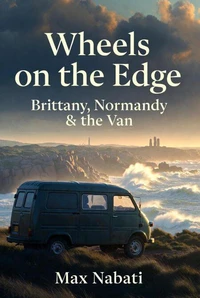
3,49 €

The Salt Wind of Khark
E-book
4,49 €
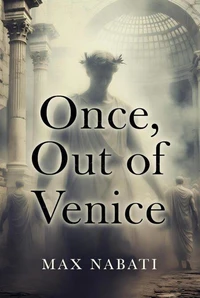
Once, Out of Venice
E-book
3,49 €
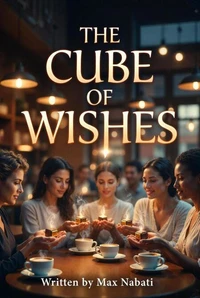
The Cube Of Wishes
E-book
8,49 €
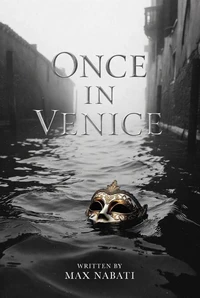
Once, in Venice
E-book
3,49 €
8,49 €
The Forty-Minutes Sunset
E-book
3,49 €
2,99 €

3,49 €
3,49 €
The Cebu Hours
E-book
4,49 €
2,99 €
Down Under, Down Below
E-book
2,99 €
6,99 €