Nouveauté
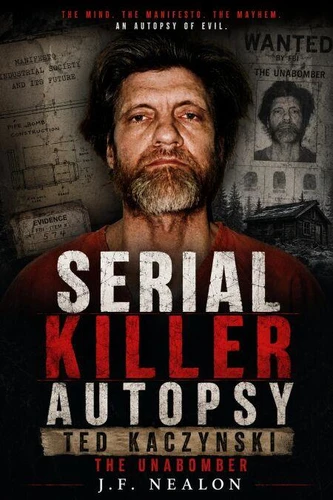
Serial Killer Autopsy: Ted Kaczynski. Serial Killer Autopsy, #50
Par :Formats :
Disponible dans votre compte client Decitre ou Furet du Nord dès validation de votre commande. Le format ePub est :
- Compatible avec une lecture sur My Vivlio (smartphone, tablette, ordinateur)
- Compatible avec une lecture sur liseuses Vivlio
- Pour les liseuses autres que Vivlio, vous devez utiliser le logiciel Adobe Digital Edition. Non compatible avec la lecture sur les liseuses Kindle, Remarkable et Sony
 , qui est-ce ?
Notre partenaire de plateforme de lecture numérique où vous retrouverez l'ensemble de vos ebooks gratuitement
Pour en savoir plus sur nos ebooks, consultez notre aide en ligne ici
C'est si simple ! Lisez votre ebook avec l'app Vivlio sur votre tablette, mobile ou ordinateur :

- FormatePub
- ISBN8233145216
- EAN9798233145216
- Date de parution29/08/2026
- Protection num.pas de protection
- Infos supplémentairesepub
- ÉditeurLinda Balsamo
Résumé
SERIAL KILLER AUTOPSYTed Kaczynski - The UnabomberTheodore John Kaczynski, the Unabomber, was a Harvard-educated mathematician who abandoned a professorship at Berkeley, retreated to a one-room cabin in the Montana wilderness, and spent seventeen years mailing bombs to the people he blamed for the destruction of human freedom. He killed three people. He injured twenty-three. He forced the Washington Post to publish his 35, 000-word manifesto under threat of further murder.
He was caught because his brother recognised his handwriting in a newspaper supplement. He spent twenty-five years in the most secure federal prison in America, continued writing, continued corresponding, and died in his cell at eighty-one in what appeared to be a suicide. Serial Killer Autopsy: Ted Kaczynski performs a forensic dissection of the entire life, not merely the crimes. It examines the prodigious mind and the profound psychological damage that grew, inseparably, from the same soil.
It reconstructs the bombing campaign device by device and victim by victim, naming the dead and the injured not as statistics but as people. It traces the seventeen-year FBI investigation that could not find him, and the brother whose love eventually did. It reads the manifesto as a political document, as a psychological self-portrait, and as a text whose intellectual afterlife, claimed by accelerationists, eco-fascists, and online extremists Kaczynski himself would have despised, continues to produce real violence.
And, in its final chapter, it asks the question that every other account of this case has avoided: was he right about anything? The answer is complicated. It is also important. This autopsy does not flinch from it.
He was caught because his brother recognised his handwriting in a newspaper supplement. He spent twenty-five years in the most secure federal prison in America, continued writing, continued corresponding, and died in his cell at eighty-one in what appeared to be a suicide. Serial Killer Autopsy: Ted Kaczynski performs a forensic dissection of the entire life, not merely the crimes. It examines the prodigious mind and the profound psychological damage that grew, inseparably, from the same soil.
It reconstructs the bombing campaign device by device and victim by victim, naming the dead and the injured not as statistics but as people. It traces the seventeen-year FBI investigation that could not find him, and the brother whose love eventually did. It reads the manifesto as a political document, as a psychological self-portrait, and as a text whose intellectual afterlife, claimed by accelerationists, eco-fascists, and online extremists Kaczynski himself would have despised, continues to produce real violence.
And, in its final chapter, it asks the question that every other account of this case has avoided: was he right about anything? The answer is complicated. It is also important. This autopsy does not flinch from it.