Nouveauté
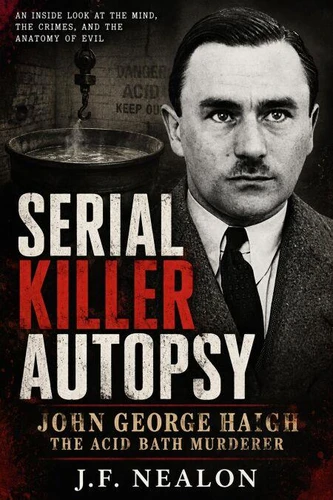
Serial Killer Autopsy: John George Haigh. Serial Killer Autopsy, #51
Par :Formats :
Disponible dans votre compte client Decitre ou Furet du Nord dès validation de votre commande. Le format ePub protégé est :
- Compatible avec une lecture sur My Vivlio (smartphone, tablette, ordinateur)
- Compatible avec une lecture sur liseuses Vivlio
- Pour les liseuses autres que Vivlio, vous devez utiliser le logiciel Adobe Digital Edition. Non compatible avec la lecture sur les liseuses Kindle, Remarkable et Sony
- Non compatible avec un achat hors France métropolitaine
 , qui est-ce ?
Notre partenaire de plateforme de lecture numérique où vous retrouverez l'ensemble de vos ebooks gratuitement
Pour en savoir plus sur nos ebooks, consultez notre aide en ligne ici
C'est si simple ! Lisez votre ebook avec l'app Vivlio sur votre tablette, mobile ou ordinateur :

- FormatePub
- ISBN8233020896
- EAN9798233020896
- Date de parution31/08/2026
- Protection num.Adobe DRM
- Infos supplémentairesepub
- ÉditeurLinda Balsamo
Résumé
Serial Killer AutopsyJohn George Haigh - The Acid Bath MurdererBetween 1944 and 1949, a charming, well-dressed businessman named John George Haigh committed one of the most calculated and horrifying series of murders in British criminal history. His victims, six trusting individuals including three members of the same family, were lured to his workshop, shot or bludgeoned to death, and then dissolved in drums of concentrated sulphuric acid.
Haigh believed he had discovered the perfect crime: without bodies, he reasoned, murder could not be proven. He was catastrophically wrong. Serial Killer Autopsy: John George Haigh - The Acid Bath Murderer is a comprehensive forensic examination of one of Britain's most infamous serial killers. This meticulously researched volume goes far beyond the sensational headlines to conduct a thorough "autopsy" of Haigh's life, crimes, psychology, and legacy.
This book approaches the Haigh case with the precision of a forensic pathologist conducting an autopsy. Each chapter dissects a different aspect of the case, from Haigh's psychological development to the chemistry of corpse dissolution, from the pattern recognition that exposed his crimes to the forensic techniques that provided evidence despite his sophisticated disposal methods. The Haigh case represents a watershed moment in British criminal history.
It proved that "no body" did not mean "no conviction." It demonstrated that even the most carefully planned murders leave evidence. It showed that forensic science could overcome sophisticated attempts at evidence destruction. And it provided crucial insights into how serial killers operate within normal society, hiding in plain sight behind masks of respectability. Ultimately, this is a story about trust betrayed, lives destroyed, and justice achieved through scientific rigor and dogged investigation.
It's about how a damaged child became a dangerous man, how intelligence without empathy creates monsters, and how careful forensic work can expose crimes that killers believe are perfect. John George Haigh thought he was too clever to be caught. He was wrong. This book explains why, and what his terrible legacy continues to teach us about crime, justice, and the darkest aspects of human nature."How can you prove murder if there is no body?" - John George Haigh's famous question, answered definitively by British forensic science and criminal justice.
Content Warning: This book contains detailed discussions of murder, including methods of killing and body disposal. While not gratuitously graphic, the technical nature of the subject matter requires frank discussion of disturbing topics. Reader discretion is advised.
Haigh believed he had discovered the perfect crime: without bodies, he reasoned, murder could not be proven. He was catastrophically wrong. Serial Killer Autopsy: John George Haigh - The Acid Bath Murderer is a comprehensive forensic examination of one of Britain's most infamous serial killers. This meticulously researched volume goes far beyond the sensational headlines to conduct a thorough "autopsy" of Haigh's life, crimes, psychology, and legacy.
This book approaches the Haigh case with the precision of a forensic pathologist conducting an autopsy. Each chapter dissects a different aspect of the case, from Haigh's psychological development to the chemistry of corpse dissolution, from the pattern recognition that exposed his crimes to the forensic techniques that provided evidence despite his sophisticated disposal methods. The Haigh case represents a watershed moment in British criminal history.
It proved that "no body" did not mean "no conviction." It demonstrated that even the most carefully planned murders leave evidence. It showed that forensic science could overcome sophisticated attempts at evidence destruction. And it provided crucial insights into how serial killers operate within normal society, hiding in plain sight behind masks of respectability. Ultimately, this is a story about trust betrayed, lives destroyed, and justice achieved through scientific rigor and dogged investigation.
It's about how a damaged child became a dangerous man, how intelligence without empathy creates monsters, and how careful forensic work can expose crimes that killers believe are perfect. John George Haigh thought he was too clever to be caught. He was wrong. This book explains why, and what his terrible legacy continues to teach us about crime, justice, and the darkest aspects of human nature."How can you prove murder if there is no body?" - John George Haigh's famous question, answered definitively by British forensic science and criminal justice.
Content Warning: This book contains detailed discussions of murder, including methods of killing and body disposal. While not gratuitously graphic, the technical nature of the subject matter requires frank discussion of disturbing topics. Reader discretion is advised.