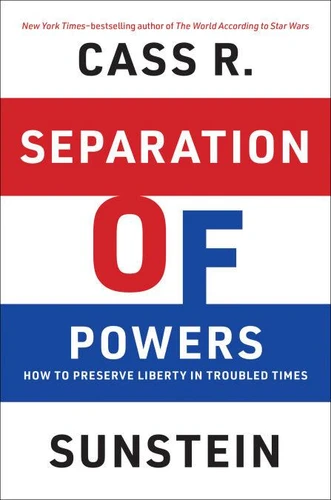
Why the separation of powers is essential to liberty and democracy. From the winner of the Holberg Prize and New York Times-bestselling author of The World According to Star Wars. All over the world, people are questioning the separation of powers. They want a strong man, able to do what must be done. But James Madison was right to say this: "The accumulation of all powers, legislative, executive, and judiciary, in the same hands, whether of one, a few, or many, and whether hereditary, self-appointed, or elective, may justly be pronounced the very definition of tyranny."In this essential and immensely timely book, Separation of Powers, Cass Sunstein explains why the separation of powers is necessary for both freedom and self-government.
He shows that freedom from fear is a central goal of the system of separation of powers. He also explains why the executive branch is the most dangerous branch, why the idea of presidential immunity is a terrible one, and why an independent judiciary is crucial. Drawing on his extensive experience in the White House, the Department of Justice, and the Department of Homeland Security, the author also argues that the separation of powers is, in fact, six separations of powers: (1) The legislature may not exercise the executive power.
(2) The legislature may not exercise the judicial power. (3) The executive may not exercise the legislative power. (4) The executive may not exercise the judicial power. (5) The judiciary may not exercise the legislative power. (6) The judiciary may not exercise the executive power. Each of these is essential to liberty under law.
Why the separation of powers is essential to liberty and democracy. From the winner of the Holberg Prize and New York Times-bestselling author of The World According to Star Wars. All over the world, people are questioning the separation of powers. They want a strong man, able to do what must be done. But James Madison was right to say this: "The accumulation of all powers, legislative, executive, and judiciary, in the same hands, whether of one, a few, or many, and whether hereditary, self-appointed, or elective, may justly be pronounced the very definition of tyranny."In this essential and immensely timely book, Separation of Powers, Cass Sunstein explains why the separation of powers is necessary for both freedom and self-government.
He shows that freedom from fear is a central goal of the system of separation of powers. He also explains why the executive branch is the most dangerous branch, why the idea of presidential immunity is a terrible one, and why an independent judiciary is crucial. Drawing on his extensive experience in the White House, the Department of Justice, and the Department of Homeland Security, the author also argues that the separation of powers is, in fact, six separations of powers: (1) The legislature may not exercise the executive power.
(2) The legislature may not exercise the judicial power. (3) The executive may not exercise the legislative power. (4) The executive may not exercise the judicial power. (5) The judiciary may not exercise the legislative power. (6) The judiciary may not exercise the executive power. Each of these is essential to liberty under law.

 , qui est-ce ?