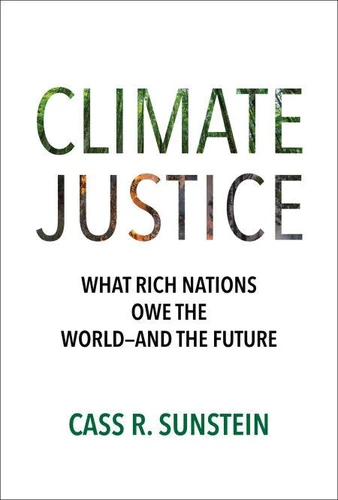
The social cost of carbon: The most important number you've never heard of-and what it means. If you're injuring someone, you should stop-and pay for the damage you've caused. Why, this book asks, does this simple proposition, generally accepted, not apply to climate change? In Climate Justice, a bracing challenge to status-quo thinking on the ethics of climate change, renowned author and legal scholar Cass Sunstein clearly frames what's at stake and lays out the moral imperative: When it comes to climate change, everyone must be counted equally, regardless of when they live or where they live-which means that wealthy nations, which have disproportionately benefited from greenhouse gas emissions, are obliged to help future generations and people in poor nations that are particularly vulnerable.
Invoking principles of corrective justice and distributive justice, Sunstein argues that rich countries should pay for the harms that they have caused and that all of us are obliged to take steps to protect future generations from serious climate-related damage. He shows how "choice engines, " informed by artificial intelligence, can enable people to save money and to reduce the harms they produce.
The book casts new light on the "social cost of carbon, " the most important number in climate change debates-and explains how intergenerational neutrality and international neutrality can help all nations, above all the United States and China, do what must be done.
The social cost of carbon: The most important number you've never heard of-and what it means. If you're injuring someone, you should stop-and pay for the damage you've caused. Why, this book asks, does this simple proposition, generally accepted, not apply to climate change? In Climate Justice, a bracing challenge to status-quo thinking on the ethics of climate change, renowned author and legal scholar Cass Sunstein clearly frames what's at stake and lays out the moral imperative: When it comes to climate change, everyone must be counted equally, regardless of when they live or where they live-which means that wealthy nations, which have disproportionately benefited from greenhouse gas emissions, are obliged to help future generations and people in poor nations that are particularly vulnerable.
Invoking principles of corrective justice and distributive justice, Sunstein argues that rich countries should pay for the harms that they have caused and that all of us are obliged to take steps to protect future generations from serious climate-related damage. He shows how "choice engines, " informed by artificial intelligence, can enable people to save money and to reduce the harms they produce.
The book casts new light on the "social cost of carbon, " the most important number in climate change debates-and explains how intergenerational neutrality and international neutrality can help all nations, above all the United States and China, do what must be done.


 , qui est-ce ?