Visual Integrity in Times of Crisis - Strategies for Dealing with AI-Generated Images
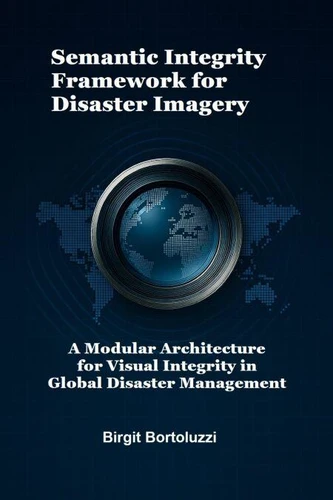
In disaster situations, every second and every image counts. AI-generated representations can distort perception, destabilize communication, and influence operational decisions on a global scale. This book presents the Semantic Integrity Framework for Disaster Imagery: a strategically developed control system for the evaluation, contextualization, and safeguarding of synthetic visual content.
The framework combines semantic precision, visual traceability, and operational decision logic.
It is modular in structure, adaptable both visually and linguistically, and deployable worldwide. Core control elements such as semantic threshold definitions, role-based governance logics, and communication-relevant impact assessments enable robust integration into existing structures.
More than a technical solution, the framework offers a strategic infrastructure for visual governance in a fragmented, high-risk information environment.
It supports traceable, context-aware decisions in real time and strengthens trust and coordination in volatile operational landscapes. Training formats, stakeholder engagement, and pattern recognition for semantic escalation expand the framework and enhance its global interoperability. It lays the foundation for future role models, visual governance, and resilient handling of synthetic media.
This work is aimed at authorities, emergency responders, media, platforms, organizations, and individuals who bear responsibility in critical moments.
It provides reliable tools for strengthening visual resilience and for the strategic management of visual content in complex crisis contexts.
A book for all who seek to rethink visual responsibility and actively shape global crisis resilience.
Visual Integrity in Times of Crisis - Strategies for Dealing with AI-Generated Images
In disaster situations, every second and every image counts. AI-generated representations can distort perception, destabilize communication, and influence operational decisions on a global scale. This book presents the Semantic Integrity Framework for Disaster Imagery: a strategically developed control system for the evaluation, contextualization, and safeguarding of synthetic visual content.
The framework combines semantic precision, visual traceability, and operational decision logic.
It is modular in structure, adaptable both visually and linguistically, and deployable worldwide. Core control elements such as semantic threshold definitions, role-based governance logics, and communication-relevant impact assessments enable robust integration into existing structures.
More than a technical solution, the framework offers a strategic infrastructure for visual governance in a fragmented, high-risk information environment.
It supports traceable, context-aware decisions in real time and strengthens trust and coordination in volatile operational landscapes. Training formats, stakeholder engagement, and pattern recognition for semantic escalation expand the framework and enhance its global interoperability. It lays the foundation for future role models, visual governance, and resilient handling of synthetic media.
This work is aimed at authorities, emergency responders, media, platforms, organizations, and individuals who bear responsibility in critical moments.
It provides reliable tools for strengthening visual resilience and for the strategic management of visual content in complex crisis contexts.
A book for all who seek to rethink visual responsibility and actively shape global crisis resilience.