
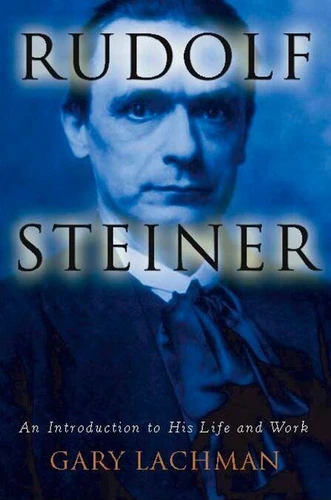
Rudolf Steiner. An Introduction to His Life and Work
Par :Formats :
Disponible dans votre compte client Decitre ou Furet du Nord dès validation de votre commande. Le format ePub protégé est :
- Compatible avec une lecture sur My Vivlio (smartphone, tablette, ordinateur)
- Compatible avec une lecture sur liseuses Vivlio
- Pour les liseuses autres que Vivlio, vous devez utiliser le logiciel Adobe Digital Edition. Non compatible avec la lecture sur les liseuses Kindle, Remarkable et Sony
- Non compatible avec un achat hors France métropolitaine
 , qui est-ce ?
Notre partenaire de plateforme de lecture numérique où vous retrouverez l'ensemble de vos ebooks gratuitement
Pour en savoir plus sur nos ebooks, consultez notre aide en ligne ici
C'est si simple ! Lisez votre ebook avec l'app Vivlio sur votre tablette, mobile ou ordinateur :

- Nombre de pages304
- FormatePub
- ISBN978-1-101-15407-6
- EAN9781101154076
- Date de parution01/02/2007
- Protection num.Adobe DRM
- Taille293 Ko
- Infos supplémentairesepub
- ÉditeurTarcher
Résumé
The first truly popular biography of the influential twentieth-century mystic and educator who-while widely known for founding the Waldorf schools and other educational and humanitarian movements-remains a mystery to many who benefit from his ideas. People everywhere have heard of Waldorf schools, Biodynamic farming, Camphill Villages, and other innovations of the Austrian philosopher Rudolf Steiner (1861-1925).
Indeed, Steiner-as an architect, artist, teacher, and agriculturalist-ranks among the most creative and prolific figures of the early twentieth century, pioneering work in alternative education, holistic health, and environmental research. While his accomplishments are felt all over the world, few people understand this unusual figure. Steiner's own writings and lectures fill several bookcases, intimidating those who would like to know more.
Works on Steiner are often dense and "insider" in tone, further deterring the curious. No popular biography, written by a sympathetic but critical outsider, has been available. Gary Lachman's Rudolf Steiner provides this missing introduction. Along with telling Steiner's story and placing Steiner in his historical context, Lachman's book presents Steiner's key ideas in a readable, accessible manner.
In particular, Lachman considers the spread of Steiner's most popular projects, which include Waldorf schools-one of the leading forms of alternative education-and Biodynamic farming-a popular precursor to organic farming. He also traces Steiner's beginnings as a young intellectual in the ferment of fin de siécle culture, to his rise as a thought leader within the influential occult movement of Theosophy, to the founding of his own metaphysical teaching called Anthroposophy.
Finally, the book illustrates how Steiner's methods are put into practice today, and relates Steiner's insights into cosmology to the work of current thinkers. Rudolf Steiner is a full-bodied portrait of one of the most original philosophical and spiritual luminaries of the last two centuries, and gives those interested in the history of ideas the opportunity to discover one of the most underappreciated figures of the twentieth century.
Indeed, Steiner-as an architect, artist, teacher, and agriculturalist-ranks among the most creative and prolific figures of the early twentieth century, pioneering work in alternative education, holistic health, and environmental research. While his accomplishments are felt all over the world, few people understand this unusual figure. Steiner's own writings and lectures fill several bookcases, intimidating those who would like to know more.
Works on Steiner are often dense and "insider" in tone, further deterring the curious. No popular biography, written by a sympathetic but critical outsider, has been available. Gary Lachman's Rudolf Steiner provides this missing introduction. Along with telling Steiner's story and placing Steiner in his historical context, Lachman's book presents Steiner's key ideas in a readable, accessible manner.
In particular, Lachman considers the spread of Steiner's most popular projects, which include Waldorf schools-one of the leading forms of alternative education-and Biodynamic farming-a popular precursor to organic farming. He also traces Steiner's beginnings as a young intellectual in the ferment of fin de siécle culture, to his rise as a thought leader within the influential occult movement of Theosophy, to the founding of his own metaphysical teaching called Anthroposophy.
Finally, the book illustrates how Steiner's methods are put into practice today, and relates Steiner's insights into cosmology to the work of current thinkers. Rudolf Steiner is a full-bodied portrait of one of the most original philosophical and spiritual luminaries of the last two centuries, and gives those interested in the history of ideas the opportunity to discover one of the most underappreciated figures of the twentieth century.
A propos de Gary Lachman

5,72 €
1,49 €