SOLDES
Jusqu'à -70% sur une sélection d'articles*

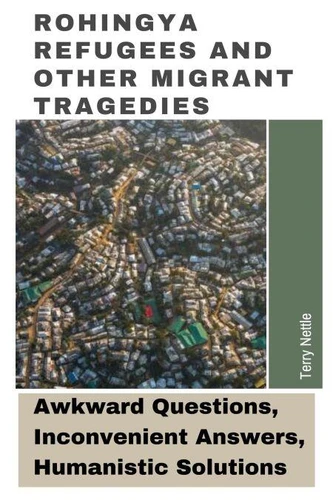
Rohingya Refugees And Other Migrant Tragedies: Awkward Questions, Inconvenient Answers, Humanistic Solutions.
Par :Formats :
Disponible dans votre compte client Decitre ou Furet du Nord dès validation de votre commande. Le format ePub est :
- Compatible avec une lecture sur My Vivlio (smartphone, tablette, ordinateur)
- Compatible avec une lecture sur liseuses Vivlio
- Pour les liseuses autres que Vivlio, vous devez utiliser le logiciel Adobe Digital Edition. Non compatible avec la lecture sur les liseuses Kindle, Remarkable et Sony
 , qui est-ce ?
Notre partenaire de plateforme de lecture numérique où vous retrouverez l'ensemble de vos ebooks gratuitement
Pour en savoir plus sur nos ebooks, consultez notre aide en ligne ici
C'est si simple ! Lisez votre ebook avec l'app Vivlio sur votre tablette, mobile ou ordinateur :

- FormatePub
- ISBN8215020395
- EAN9798215020395
- Date de parution21/02/2023
- Protection num.pas de protection
- Infos supplémentairesepub
- ÉditeurWMG Publishing
Résumé
Some of the world's greatest tragedies are happening today in the many refugee camps all over the world. About 30 million refugees are in refugee camps in various parts of the world. At least a hundred million people are displaced by war, famine and ethnic conflicts. More than 7 million Syrians have been displaced by the continuous war in Syria. In Africa alone, Eritrea has about half a million refugees.
In Somalia, Democratic Republic of Congo, Central African Republic, Sudan, South Sudan, there are about 800, 000 refugees each from wars, famine and ethnic conflicts in the region. The more than a million Rohingya refugees in Bangladesh and other countries are among the most tragic refugees that are challenging the world's conscience. What are the reasons for all these human tragedies? Who and what have contributed to the creation of the huge refugee population around the world?The seemingly intractable problems of refugees and illegal migrants can only be solved by using a humanistic approach of viewing every single person as worthy of compassion, empathy and assistance.
There are two practical ways to do this. Firstly, wealthy countries can undertake to transform refugee camps into functioning cities, complete with municipal administration and facilities and job creation. Secondly, they can open up their borders to admit the disadvantaged people from around the world by offering them jobs and accommodation in their remote communities where the populations have been declining due to ageing and youths drawn to urban centres.
Addressing these issues quickly and effectively is the responsibility of all humankind.
In Somalia, Democratic Republic of Congo, Central African Republic, Sudan, South Sudan, there are about 800, 000 refugees each from wars, famine and ethnic conflicts in the region. The more than a million Rohingya refugees in Bangladesh and other countries are among the most tragic refugees that are challenging the world's conscience. What are the reasons for all these human tragedies? Who and what have contributed to the creation of the huge refugee population around the world?The seemingly intractable problems of refugees and illegal migrants can only be solved by using a humanistic approach of viewing every single person as worthy of compassion, empathy and assistance.
There are two practical ways to do this. Firstly, wealthy countries can undertake to transform refugee camps into functioning cities, complete with municipal administration and facilities and job creation. Secondly, they can open up their borders to admit the disadvantaged people from around the world by offering them jobs and accommodation in their remote communities where the populations have been declining due to ageing and youths drawn to urban centres.
Addressing these issues quickly and effectively is the responsibility of all humankind.