Nouveauté
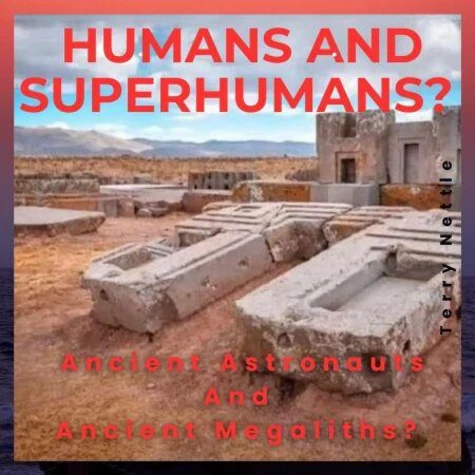
Humans And Superhumans?: Ancient Astronauts And Ancient Megaliths?
Par :Formats :
Disponible dans votre compte client Decitre ou Furet du Nord dès validation de votre commande. Le format ePub est :
- Compatible avec une lecture sur My Vivlio (smartphone, tablette, ordinateur)
- Compatible avec une lecture sur liseuses Vivlio
- Pour les liseuses autres que Vivlio, vous devez utiliser le logiciel Adobe Digital Edition. Non compatible avec la lecture sur les liseuses Kindle, Remarkable et Sony
 , qui est-ce ?
Notre partenaire de plateforme de lecture numérique où vous retrouverez l'ensemble de vos ebooks gratuitement
Pour en savoir plus sur nos ebooks, consultez notre aide en ligne ici
C'est si simple ! Lisez votre ebook avec l'app Vivlio sur votre tablette, mobile ou ordinateur :

- FormatePub
- ISBN8235554238
- EAN9798235554238
- Date de parution28/05/2026
- Protection num.pas de protection
- Infos supplémentairesepub
- ÉditeurIoakim Ioakim
Résumé
Many of the early human achievements left on Earth are truly amazing, and may seem to border on the impossible. This is especially so in the construction of many awe-inspiring megalithic structures. Indeed, some prehistoric archaeological sites in Turkiye, Egypt, and Bolivia, are almost impossible to rationalize. They seem like the work of non-human or superhuman intelligent beings from outer space with incredible power and advanced technology.
But, is this possible?Is this true?The amazing achievements of early human civilizations are to be appreciated and understood properly, and not just attributed frivolously to alien intervention or unknown fantastic ancient civilizations. Indeed, many useful things can be learned by modern civilization from our well-authenticated early human civilizations. Certainly, to be fascinated and overawed by the unlikely theories of ancient astronauts is not healthy nor useful.
The most critical lessons for humankind to learn from all this is that these early human civilizations' successful and innovative development were the direct result of human ingenuity, human cooperation, organization, leadership and teamwork.
But, is this possible?Is this true?The amazing achievements of early human civilizations are to be appreciated and understood properly, and not just attributed frivolously to alien intervention or unknown fantastic ancient civilizations. Indeed, many useful things can be learned by modern civilization from our well-authenticated early human civilizations. Certainly, to be fascinated and overawed by the unlikely theories of ancient astronauts is not healthy nor useful.
The most critical lessons for humankind to learn from all this is that these early human civilizations' successful and innovative development were the direct result of human ingenuity, human cooperation, organization, leadership and teamwork.