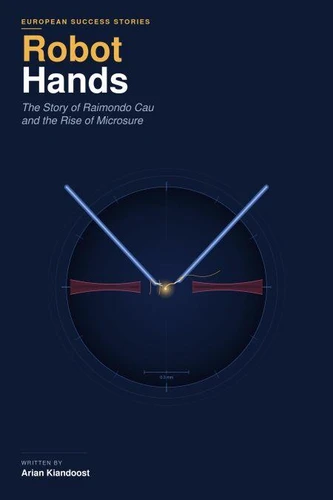
A surgeon reattaching a severed nerve works under a microscope, stitching vessels thinner than a human hair with hands that must not tremble. Even the steadiest hands have limits - a natural tremor of about a hundred micrometres that no amount of training can eliminate. For decades, microsurgeons simply accepted that limit. Then a team in Eindhoven built a robot that removed it. This is the story of Microsure and the MUSA robot - a device that gives surgeons hands that cannot shake.
Born from the robotics laboratory of Maarten Steinbuch at TU Eindhoven and shaped by the clinical vision of surgeon Raimondo Cau, MUSA became the first robot-assisted system used in human supermicrosurgery. This book follows the journey from a university prototype to a certified medical device now entering operating rooms, and asks what happens when engineering meets the finest limits of human skill.
A surgeon reattaching a severed nerve works under a microscope, stitching vessels thinner than a human hair with hands that must not tremble. Even the steadiest hands have limits - a natural tremor of about a hundred micrometres that no amount of training can eliminate. For decades, microsurgeons simply accepted that limit. Then a team in Eindhoven built a robot that removed it. This is the story of Microsure and the MUSA robot - a device that gives surgeons hands that cannot shake.
Born from the robotics laboratory of Maarten Steinbuch at TU Eindhoven and shaped by the clinical vision of surgeon Raimondo Cau, MUSA became the first robot-assisted system used in human supermicrosurgery. This book follows the journey from a university prototype to a certified medical device now entering operating rooms, and asks what happens when engineering meets the finest limits of human skill.

 , qui est-ce ?