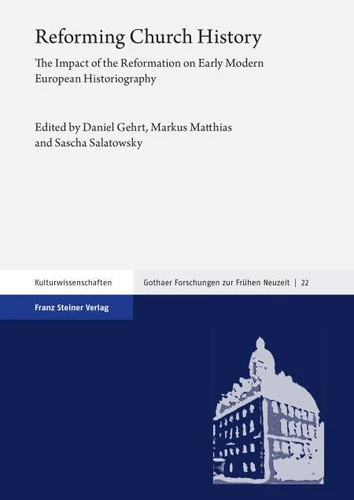



Daniel Gehrt ist seit 2004 wissenschaftlicher Mitarbeiter an der Forschungsbibliothek Gotha. Er hat an der Friedrich-Schiller-Universität Jena über die Konfessionspolitik der ernestinischen Herzöge vom Augsburger Interim 1548 bis zur Konkordienformel 1577 promoviert. Im Rahmen von drei DFG-Projekten katalogisierte er Kernbestände der frühneuzeitlichen Handschriftensammlung der Forschungsbibliothek Gotha.
Dazu zählen Quellen zur Reformation in Europa, die Nachlässe der Jenaer Theologen Johann (1582-1637) und Johann Ernst Gerhard (1621-1668) sowie der amtliche Nachlass des Gothaer Kirchenrats, Historikers und Bibliotheksdirektors Ernst Salomon Cyprian (1673-1745). In Verbindung mit dieser Erschließungsarbeit regt er neue Forschung an, organisiert wissenschaftliche Tagungen und kuratiert kleinere Ausstellungen. Markus Matthias wurde nach dem Studium der Deutschen Philologie und Evangelischen Theologie in Göttingen, Tübingen, Jerusalem und Strasbourg und dem 1.
und 2. Kirchlichen Examen 1988 in Erlangen zum Dr. theol. promoviert. Anschließend war er wissenschaftlicher Mitarbeiter am Projekt Spener-Briefe der Deutschen Forschungsgemeinschaft (DFG) in Bochum und wissenschaftlicher Assistent in Halle an der Saale, wo er sich 2002 für das Fach Evangelische Kirchengeschichte habilitierte. Im Jahr 2008 wurde Markus Matthias nach Vertretungsprofessuren in Dresden, Kiel und Heidelberg auf den Lehrstuhl Lutherana (Geschichte und Theologie Luthers und des Luthertums) an der Protestantischen Theologischen Universität (damals Utrecht-Kampen Leiden, jetzt Amsterdam-Groningen) berufen. Sascha Salatowsky ist wissenschaftlicher Referent an der Forschungsbibliothek Gotha.
Sein Forschungsschwerpunkt liegt in der Philosophie und Theologie der Frühen Neuzeit mit einem besonderen Interesse am Aristotelismus und Sozinianismus.
Dazu zählen Quellen zur Reformation in Europa, die Nachlässe der Jenaer Theologen Johann (1582-1637) und Johann Ernst Gerhard (1621-1668) sowie der amtliche Nachlass des Gothaer Kirchenrats, Historikers und Bibliotheksdirektors Ernst Salomon Cyprian (1673-1745). In Verbindung mit dieser Erschließungsarbeit regt er neue Forschung an, organisiert wissenschaftliche Tagungen und kuratiert kleinere Ausstellungen. Markus Matthias wurde nach dem Studium der Deutschen Philologie und Evangelischen Theologie in Göttingen, Tübingen, Jerusalem und Strasbourg und dem 1.
und 2. Kirchlichen Examen 1988 in Erlangen zum Dr. theol. promoviert. Anschließend war er wissenschaftlicher Mitarbeiter am Projekt Spener-Briefe der Deutschen Forschungsgemeinschaft (DFG) in Bochum und wissenschaftlicher Assistent in Halle an der Saale, wo er sich 2002 für das Fach Evangelische Kirchengeschichte habilitierte. Im Jahr 2008 wurde Markus Matthias nach Vertretungsprofessuren in Dresden, Kiel und Heidelberg auf den Lehrstuhl Lutherana (Geschichte und Theologie Luthers und des Luthertums) an der Protestantischen Theologischen Universität (damals Utrecht-Kampen Leiden, jetzt Amsterdam-Groningen) berufen. Sascha Salatowsky ist wissenschaftlicher Referent an der Forschungsbibliothek Gotha.
Sein Forschungsschwerpunkt liegt in der Philosophie und Theologie der Frühen Neuzeit mit einem besonderen Interesse am Aristotelismus und Sozinianismus.