
Roger Hutchinson is Professor of Church and Society at Emmanuel College in the Toronto School of Theology and teaches ethics in the University of Toronto's Department for the Study of Religion and Faculty of Forestry. Along with Cranford Pratt he co-edited and contributed to Christian Faith & Economic Justice: Toward a Canadian Perspective.
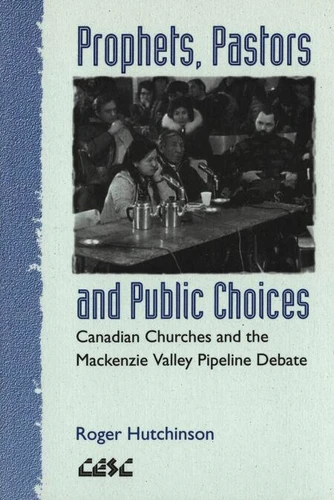
Prophets, Pastors and Public Choices. Canadian Churches and the Mackenzie Valley Pipeline Debate
Par :Formats :
Disponible dans votre compte client Decitre ou Furet du Nord dès validation de votre commande. Le format PDF est :
- Compatible avec une lecture sur My Vivlio (smartphone, tablette, ordinateur)
- Compatible avec une lecture sur liseuses Vivlio
- Pour les liseuses autres que Vivlio, vous devez utiliser le logiciel Adobe Digital Edition. Non compatible avec la lecture sur les liseuses Kindle, Remarkable et Sony
 , qui est-ce ?
Notre partenaire de plateforme de lecture numérique où vous retrouverez l'ensemble de vos ebooks gratuitement
Pour en savoir plus sur nos ebooks, consultez notre aide en ligne ici
C'est si simple ! Lisez votre ebook avec l'app Vivlio sur votre tablette, mobile ou ordinateur :

- Nombre de pages156
- FormatPDF
- ISBN0-88920-763-1
- EAN9780889207639
- Date de parution01/01/2006
- Protection num.Digital Watermarking
- Taille10 Mo
- Infos supplémentairespdf
- ÉditeurWilfrid Laurier University Press
Résumé
The Mackenzie Valley natural gas pipeline debate included many actors. This is the first in-depth study in comparative religious ethics to examine the debate with a particular focus on the role of the Canadian churches. In 1974 twenty-seven of the world's largest oil and natural gas companies applied for permission to build a pipeline through the Mackenzie Valley to transport Alaskan and northern Canadian gas to large southern markets.
Many northern native peoples opposed the proposal and called for a moratorium on major northern development projects until native land claims had been settled. The mainline Canadian Christian churches supported the call for a moratorium and, through the interchurch coalition, Project North, campaigned against the pipeline. However, some native peoples supported the proposal to build the pipeline, and many of the pipeline's proponents were members of churches that called for a moratorium on the project.
This case study in comparative religious ethics, though written from a pro-moratorium stand, attempts to clarify the debate. Conflicting responses to the pipeline proposal are assessed in relation to "hard facts" concerning the need for northern gas in the South, social-scientific findings regarding the impact of the pipeline on native communities, the rights of native peoples to participate in decisions affecting their lives, assumptions about the way of life of non-native people in the South and the role of religious convictions in public choices.
This thoroughly researched study reveals the inner workings and influences of the Canadian churches involved and illustrates their commitment on behalf of the northern natives opposed to the project.
Many northern native peoples opposed the proposal and called for a moratorium on major northern development projects until native land claims had been settled. The mainline Canadian Christian churches supported the call for a moratorium and, through the interchurch coalition, Project North, campaigned against the pipeline. However, some native peoples supported the proposal to build the pipeline, and many of the pipeline's proponents were members of churches that called for a moratorium on the project.
This case study in comparative religious ethics, though written from a pro-moratorium stand, attempts to clarify the debate. Conflicting responses to the pipeline proposal are assessed in relation to "hard facts" concerning the need for northern gas in the South, social-scientific findings regarding the impact of the pipeline on native communities, the rights of native peoples to participate in decisions affecting their lives, assumptions about the way of life of non-native people in the South and the role of religious convictions in public choices.
This thoroughly researched study reveals the inner workings and influences of the Canadian churches involved and illustrates their commitment on behalf of the northern natives opposed to the project.
A propos de Roger Hutchinson


6,99 €

12,99 €



12,99 €
8,49 €