Roger Hutchinson is an award-winning author and journalist. He lives on the Isle of Raasay.
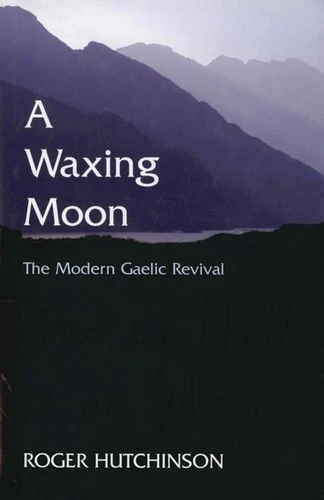
A Waxing Moon. The Modern Gaelic Revival
Par :Formats :
Disponible dans votre compte client Decitre ou Furet du Nord dès validation de votre commande. Le format ePub protégé est :
- Compatible avec une lecture sur My Vivlio (smartphone, tablette, ordinateur)
- Compatible avec une lecture sur liseuses Vivlio
- Pour les liseuses autres que Vivlio, vous devez utiliser le logiciel Adobe Digital Edition. Non compatible avec la lecture sur les liseuses Kindle, Remarkable et Sony
- Non compatible avec un achat hors France métropolitaine
 , qui est-ce ?
Notre partenaire de plateforme de lecture numérique où vous retrouverez l'ensemble de vos ebooks gratuitement
Pour en savoir plus sur nos ebooks, consultez notre aide en ligne ici
C'est si simple ! Lisez votre ebook avec l'app Vivlio sur votre tablette, mobile ou ordinateur :

- Nombre de pages272
- FormatePub
- ISBN978-1-78057-310-6
- EAN9781780573106
- Date de parution21/10/2011
- Protection num.Adobe DRM
- Infos supplémentairesepub
- ÉditeurMainstream Digital
Résumé
Thirty years ago, the Gaelic language and culture which had been eminent in Scotland for 1, 300 years seemed to be in the final stages of a 200-year terminal decline. The number of Gaelic speakers in Scotland had fallen tenfold over the previous century. The language itself was commonplace only in the scattered communities of the north-west Highlands and Hebrides. By the early years of the 21st century, however, a sea-change had taken place.
Gaelic - for so long a subject of mockery and hostility - had become what some termed 'fashionable'. Gaelic-speaking jobs were available; Gaelic-medium education was established in many areas; and politicians and business-people saw benefits in acting as friends of the culture. While the numbers of Gaelic-speakers continued to fall as older people passed away, the decline was slowed and for the first time in 100 years the percentage of young people using the language began to rise proportionately.
What had happened was a kind of renaissance: a Gaelic revival that manifested itself in popular music, literature, art, poetry, publishing, drama, radio and television. It was a phenomenon as obvious as it was unexpected. And at the heart of that movement lay education. A Gaelic Modern History will tell the story of one institution, Sabhal Mor Ostaig, the Gaelic College in Skye that has stood at the centre of this revival.
But, chiefly, the book will examine how a venerable culture was given hope for the future at the point when all seemed lost. It recounts the scores of personalities, from Sorley Maclean and Runrig to Michael Forsyth and Gordon Brown, who have become involved in that process.
Gaelic - for so long a subject of mockery and hostility - had become what some termed 'fashionable'. Gaelic-speaking jobs were available; Gaelic-medium education was established in many areas; and politicians and business-people saw benefits in acting as friends of the culture. While the numbers of Gaelic-speakers continued to fall as older people passed away, the decline was slowed and for the first time in 100 years the percentage of young people using the language began to rise proportionately.
What had happened was a kind of renaissance: a Gaelic revival that manifested itself in popular music, literature, art, poetry, publishing, drama, radio and television. It was a phenomenon as obvious as it was unexpected. And at the heart of that movement lay education. A Gaelic Modern History will tell the story of one institution, Sabhal Mor Ostaig, the Gaelic College in Skye that has stood at the centre of this revival.
But, chiefly, the book will examine how a venerable culture was given hope for the future at the point when all seemed lost. It recounts the scores of personalities, from Sorley Maclean and Runrig to Michael Forsyth and Gordon Brown, who have become involved in that process.
A propos de Roger Hutchinson
6,99 €
12,99 €
8,49 €