
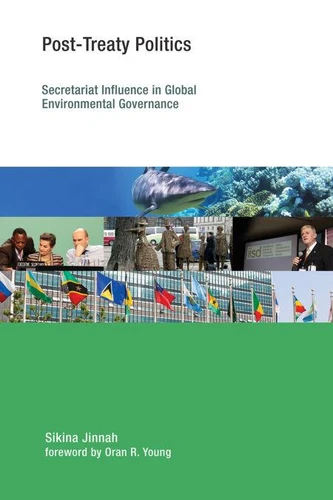
Post-Treaty Politics. Secretariat Influence in Global Environmental Governance
Par : ,Formats :
Disponible dans votre compte client Decitre ou Furet du Nord dès validation de votre commande. Le format ePub protégé est :
- Compatible avec une lecture sur My Vivlio (smartphone, tablette, ordinateur)
- Compatible avec une lecture sur liseuses Vivlio
- Pour les liseuses autres que Vivlio, vous devez utiliser le logiciel Adobe Digital Edition. Non compatible avec la lecture sur les liseuses Kindle, Remarkable et Sony
- Non compatible avec un achat hors France métropolitaine
 , qui est-ce ?
Notre partenaire de plateforme de lecture numérique où vous retrouverez l'ensemble de vos ebooks gratuitement
Pour en savoir plus sur nos ebooks, consultez notre aide en ligne ici
C'est si simple ! Lisez votre ebook avec l'app Vivlio sur votre tablette, mobile ou ordinateur :

- Nombre de pages272
- FormatePub
- ISBN978-0-262-32536-3
- EAN9780262325363
- Date de parution31/10/2014
- Protection num.Adobe DRM
- Taille2 Mo
- Infos supplémentairesepub
- ÉditeurThe MIT Press
Résumé
An argument that secretariats-the administrative arms of international treaties-are political actors in their own right. Secretariats-the administrative arms of international treaties--would seem simply to do the bidding of member states. And yet, Sikina Jinnah argues in Post-Treaty Politics, secretariats can play an important role in world politics. On paper, secretariats collect information, communicate with state actors, and coordinate diplomatic activity.
In practice, they do much more. As Jinnah shows, they can influence the allocation of resources, structures of interstate cooperation, and the power relationships between states. Jinnah examines secretariat influence through the lens of overlap management in environmental governance-how secretariats help to manage the dense interplay of issues, rules, and norms between international treaty regimes.
Through four case studies, she shows that secretariats can draw on their unique networks and expertise to handle the challenges of overlap management, emerging as political actors in their own right. After presenting a theory and analytical framework for analyzing secretariat influence, Jinnah examines secretariat influence on overlap management within the Convention on Biological Diversity (CBD), two cases of overlap management in the World Trade Organization, as well as a case in which the Convention on International Trade in Endangered Species (CITES) secretariat failed to influence political outcomes despite its efforts to manage overlap.
Jinnah argues that, even when modest, secretariat influence matters because it can establish a path-dependent dynamic that continues to guide state behavior even after secretariat influence has waned.
In practice, they do much more. As Jinnah shows, they can influence the allocation of resources, structures of interstate cooperation, and the power relationships between states. Jinnah examines secretariat influence through the lens of overlap management in environmental governance-how secretariats help to manage the dense interplay of issues, rules, and norms between international treaty regimes.
Through four case studies, she shows that secretariats can draw on their unique networks and expertise to handle the challenges of overlap management, emerging as political actors in their own right. After presenting a theory and analytical framework for analyzing secretariat influence, Jinnah examines secretariat influence on overlap management within the Convention on Biological Diversity (CBD), two cases of overlap management in the World Trade Organization, as well as a case in which the Convention on International Trade in Endangered Species (CITES) secretariat failed to influence political outcomes despite its efforts to manage overlap.
Jinnah argues that, even when modest, secretariat influence matters because it can establish a path-dependent dynamic that continues to guide state behavior even after secretariat influence has waned.
A propos de Sikina Jinnah
24,52 €