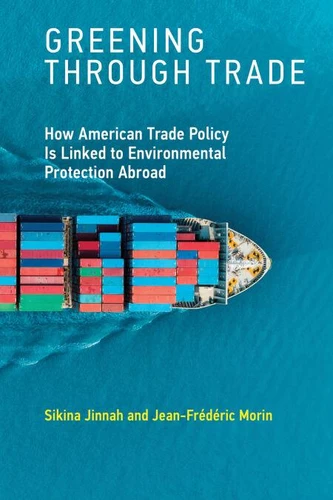
How the environmental provisions in US preferential trade agreements affect both the environmental policies of trading partners and the effectiveness of multilateral environmental agreements. As trade negotiations within the World Trade Organization seem permanently stalled, countries turn increasingly to preferential trade agreements (PTAs) between smaller groups of nations. Many of these PTAs incorporate environmental provisions, some of which require trading partners to enact new domestic environmental laws, and use the enforcement mechanisms available within trade agreements as tools for environmental protection.
In Greening through Trade, Sikina Jinnah and Jean-Frédéric Morin provide the first detailed examination of how the environmental provisions in US preferential trade agreements affect both the environmental policies of trading partners and the effectiveness of multilateral environmental agreements. They do so through a combination of in-depth qualitative case studies and quantitative analysis of an original dataset of 688 global PTAs.
Jinnah and Morin explore the effects of linkages between PTAs and environmental treaties and the diffusion of environmental norms and policy through PTAs. Centrally, they argue that US trade agreements can serve as mechanisms both to export environmental policies to trading partner nations and third-party countries and to enhance the effectiveness of multilateral environmental agreements by strengthening their enforcement capacity.
They caution that PTAs are not a panacea for environmental governance; deeper problems of unsustainable consumption and differential power dynamics between trading partners must be carefully navigated in deploying trade agreements for environmental protection.
How the environmental provisions in US preferential trade agreements affect both the environmental policies of trading partners and the effectiveness of multilateral environmental agreements. As trade negotiations within the World Trade Organization seem permanently stalled, countries turn increasingly to preferential trade agreements (PTAs) between smaller groups of nations. Many of these PTAs incorporate environmental provisions, some of which require trading partners to enact new domestic environmental laws, and use the enforcement mechanisms available within trade agreements as tools for environmental protection.
In Greening through Trade, Sikina Jinnah and Jean-Frédéric Morin provide the first detailed examination of how the environmental provisions in US preferential trade agreements affect both the environmental policies of trading partners and the effectiveness of multilateral environmental agreements. They do so through a combination of in-depth qualitative case studies and quantitative analysis of an original dataset of 688 global PTAs.
Jinnah and Morin explore the effects of linkages between PTAs and environmental treaties and the diffusion of environmental norms and policy through PTAs. Centrally, they argue that US trade agreements can serve as mechanisms both to export environmental policies to trading partner nations and third-party countries and to enhance the effectiveness of multilateral environmental agreements by strengthening their enforcement capacity.
They caution that PTAs are not a panacea for environmental governance; deeper problems of unsustainable consumption and differential power dynamics between trading partners must be carefully navigated in deploying trade agreements for environmental protection.

 , qui est-ce ?