At 2:13 A. M., the public library slips into night mode-doors auto-lock, compact shelves "park, " and a dumbwaiter hums its steady mid-band song. Reference librarian Fiona Hale notices an open locker, a jammed returns cart, and a series of "interlibrary loans" that never actually left town. When a heavy phantom load rides the dumbwaiter at the exact same minute on multiple nights, Fiona hears what others miss: the small machine's noise is masking a larger one-the low register of the main elevator's counterweight engaging where it shouldn't.
What follows is a library thriller with no ghosts and no cheats, only systems bent by human motive. With colleague Maya and a pragmatic detective, Fiona works a procedural thriller through logs, seals, and maintenance notes: a tri-wing faceplate screw with bright bite marks; condensation where the physics says it shouldn't be; a call-number acrostic that spells the place no one thinks to look. Behind the counterweight shroud, a body answers the question the building has been trying to ask.
The thieves' method is elegant and cruel-locked-room mystery mechanics in plain sight. Wet-paper "bricks" create weight and sound cover; decoy folio cases move real plates to a private buyer; the timeline is fogged by routine. When the trap finally springs, doors re-latch, shelving closes, and the inert-gas cabinet prepares to suffocate evidence-and anyone in the room. Survival depends not on bravado but on training: interlocks, aborts, wedges, and the dull bravery of doing the next legal thing.
Phantom Load is slow-burn suspense set in Special Collections: the hum of fans, the click of keys, the ethics of stewardship. It flirts with dark academia in atmosphere-maps, bindings, hush-while staying firmly in the realm of consequence and chain-of-custody. It's also a crime thriller about euphemisms that grow teeth: debt renamed optics, "process" taught to lie, and a cover-up that mistakes quiet for safety.
Fiona isn't an action hero; she's a female sleuth whose superpower is attention-and the choice to be boring and correct when adrenaline votes otherwise. For readers who love fair-play clues, industrial dread, and institutions that push back, this novel offers a new way to be scared: not of the dark, but of the ways ordinary noise can be arranged to hide intent-until someone listens closely enough to make the building tell the truth.
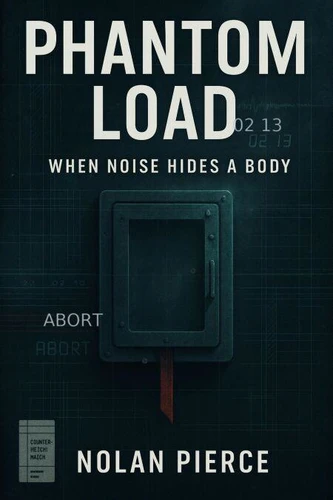
At 2:13 A. M., the public library slips into night mode-doors auto-lock, compact shelves "park, " and a dumbwaiter hums its steady mid-band song. Reference librarian Fiona Hale notices an open locker, a jammed returns cart, and a series of "interlibrary loans" that never actually left town. When a heavy phantom load rides the dumbwaiter at the exact same minute on multiple nights, Fiona hears what others miss: the small machine's noise is masking a larger one-the low register of the main elevator's counterweight engaging where it shouldn't.
What follows is a library thriller with no ghosts and no cheats, only systems bent by human motive. With colleague Maya and a pragmatic detective, Fiona works a procedural thriller through logs, seals, and maintenance notes: a tri-wing faceplate screw with bright bite marks; condensation where the physics says it shouldn't be; a call-number acrostic that spells the place no one thinks to look. Behind the counterweight shroud, a body answers the question the building has been trying to ask.
The thieves' method is elegant and cruel-locked-room mystery mechanics in plain sight. Wet-paper "bricks" create weight and sound cover; decoy folio cases move real plates to a private buyer; the timeline is fogged by routine. When the trap finally springs, doors re-latch, shelving closes, and the inert-gas cabinet prepares to suffocate evidence-and anyone in the room. Survival depends not on bravado but on training: interlocks, aborts, wedges, and the dull bravery of doing the next legal thing.
Phantom Load is slow-burn suspense set in Special Collections: the hum of fans, the click of keys, the ethics of stewardship. It flirts with dark academia in atmosphere-maps, bindings, hush-while staying firmly in the realm of consequence and chain-of-custody. It's also a crime thriller about euphemisms that grow teeth: debt renamed optics, "process" taught to lie, and a cover-up that mistakes quiet for safety.
Fiona isn't an action hero; she's a female sleuth whose superpower is attention-and the choice to be boring and correct when adrenaline votes otherwise. For readers who love fair-play clues, industrial dread, and institutions that push back, this novel offers a new way to be scared: not of the dark, but of the ways ordinary noise can be arranged to hide intent-until someone listens closely enough to make the building tell the truth.


 , qui est-ce ?