Perpetual Peace: A Philosophical Essay
Par :Formats :
Disponible dans votre compte client Decitre ou Furet du Nord dès validation de votre commande. Le format ePub est :
- Compatible avec une lecture sur My Vivlio (smartphone, tablette, ordinateur)
- Compatible avec une lecture sur liseuses Vivlio
- Pour les liseuses autres que Vivlio, vous devez utiliser le logiciel Adobe Digital Edition. Non compatible avec la lecture sur les liseuses Kindle, Remarkable et Sony
 , qui est-ce ?
Notre partenaire de plateforme de lecture numérique où vous retrouverez l'ensemble de vos ebooks gratuitement
Pour en savoir plus sur nos ebooks, consultez notre aide en ligne ici
C'est si simple ! Lisez votre ebook avec l'app Vivlio sur votre tablette, mobile ou ordinateur :

- Nombre de pages133
- FormatePub
- ISBN978-3-98647-195-8
- EAN9783986471958
- Date de parution21/10/2021
- Protection num.Digital Watermarking
- Taille714 Ko
- Infos supplémentairesepub
- ÉditeurMario Huehne
Résumé
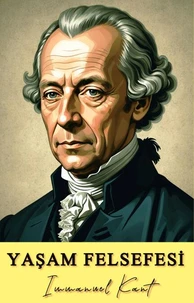
Perpetual Peace: A Philosophical Essay Immanuel Kant - Immanuel Kant was a German philosopher from Königsberg (today Kaliningrad of Russia), researching, lecturing and writing on philosophy and anthropology at the end of the 18th Century Enlightenment. At the time, there were major successes and advances in the sciences (for example, Isaac Newton, Carl Friedrich Gauss, and Robert Boyle) using reason and logic.
But this stood in sharp contrast to the scepticism and lack of agreement or progress in empiricist philosophy. Kants magnum opus, the Critique of Pure Reason, aimed to unite reason with experience to move beyond what he took to be failures of traditional philosophy and metaphysics. He hoped to end an age of speculation where objects outside experience were used to support what he saw as futile theories, while opposing the scepticism and idealism of thinkers such as Descartes, Berkeley and Hume.
He said that it always remains a scandal of philosophy and universal human reason that the existence of things outside us ... should have to be assumed merely on faith, and that if it occurs to anyone to doubt it, we should be unable to answer him with a satisfactory proof. Kant proposed a Copernican Revolution, saying that 'Up to now it has been assumed that all our cognition must conform to the objects; but ...let us once try whether we do not get farther with the problems of metaphysics by assuming that the objects must conform to our cognition'.
Kant published other important works on religion, law, aesthetics, astronomy and history. These included the Critique of Practical Reason (Kritik der praktischen Vernunft, 1788), which deals with ethics, and the Critique of Judgment (Kritik der Urteilskraft, 1790), which looks at aesthetics and teleology. He aimed to resolve disputes between empirical and rationalist approaches. The former asserted that all knowledge comes through experience; the latter maintained that reason and innate ideas were prior.
Kant argued that experience is purely subjective without first being processed by pure reason. He also said that using reason without applying it to experience will only lead to theoretical illusions. The free and proper exercise of reason by the individual was both a theme of the Enlightenment, and of Kant's approaches to the various problems of philosophy. His ideas influenced many thinkers in Germany during his lifetime.
He settled, and moved philosophy beyond, the debate between the rationalists and empiricists. The philosophers Fichte, Schelling, Hegel and Schopenhauer amended and developed the Kantian system, thus bringing about various forms of German idealism. He is seen as a major figure in the history and development of philosophy. German and European thinking progressed after his time, and his influence still inspires philosophical work today.
But this stood in sharp contrast to the scepticism and lack of agreement or progress in empiricist philosophy. Kants magnum opus, the Critique of Pure Reason, aimed to unite reason with experience to move beyond what he took to be failures of traditional philosophy and metaphysics. He hoped to end an age of speculation where objects outside experience were used to support what he saw as futile theories, while opposing the scepticism and idealism of thinkers such as Descartes, Berkeley and Hume.
He said that it always remains a scandal of philosophy and universal human reason that the existence of things outside us ... should have to be assumed merely on faith, and that if it occurs to anyone to doubt it, we should be unable to answer him with a satisfactory proof. Kant proposed a Copernican Revolution, saying that 'Up to now it has been assumed that all our cognition must conform to the objects; but ...let us once try whether we do not get farther with the problems of metaphysics by assuming that the objects must conform to our cognition'.
Kant published other important works on religion, law, aesthetics, astronomy and history. These included the Critique of Practical Reason (Kritik der praktischen Vernunft, 1788), which deals with ethics, and the Critique of Judgment (Kritik der Urteilskraft, 1790), which looks at aesthetics and teleology. He aimed to resolve disputes between empirical and rationalist approaches. The former asserted that all knowledge comes through experience; the latter maintained that reason and innate ideas were prior.
Kant argued that experience is purely subjective without first being processed by pure reason. He also said that using reason without applying it to experience will only lead to theoretical illusions. The free and proper exercise of reason by the individual was both a theme of the Enlightenment, and of Kant's approaches to the various problems of philosophy. His ideas influenced many thinkers in Germany during his lifetime.
He settled, and moved philosophy beyond, the debate between the rationalists and empiricists. The philosophers Fichte, Schelling, Hegel and Schopenhauer amended and developed the Kantian system, thus bringing about various forms of German idealism. He is seen as a major figure in the history and development of philosophy. German and European thinking progressed after his time, and his influence still inspires philosophical work today.