
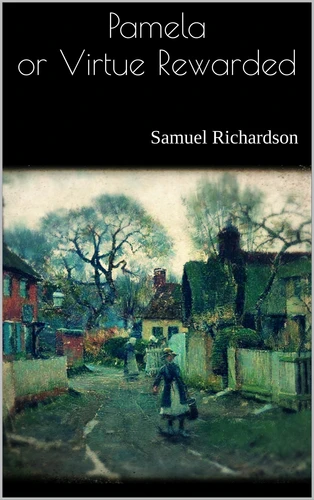
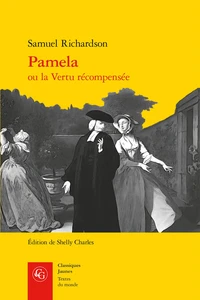
Pamela or Virtue Rewarded
Par :Formats :
Disponible dans votre compte client Decitre ou Furet du Nord dès validation de votre commande. Le format ePub est :
- Compatible avec une lecture sur My Vivlio (smartphone, tablette, ordinateur)
- Compatible avec une lecture sur liseuses Vivlio
- Pour les liseuses autres que Vivlio, vous devez utiliser le logiciel Adobe Digital Edition. Non compatible avec la lecture sur les liseuses Kindle, Remarkable et Sony
 , qui est-ce ?
Notre partenaire de plateforme de lecture numérique où vous retrouverez l'ensemble de vos ebooks gratuitement
Pour en savoir plus sur nos ebooks, consultez notre aide en ligne ici
C'est si simple ! Lisez votre ebook avec l'app Vivlio sur votre tablette, mobile ou ordinateur :

- Nombre de pages767
- FormatePub
- ISBN978-3-7392-1777-2
- EAN9783739217772
- Date de parution28/05/2019
- Protection num.Digital Watermarking
- Taille800 Ko
- Infos supplémentairesepub
- ÉditeurBooks on Demand
Résumé
Samuel Richardson, the first, in order of time, of the great English novelists, was born in 1689 and died at London in 1761. He was a printer by trade, and rose to be master of the Stationers' Company. That he also became a novelist was due to his skill as a letter-writer, which brought him, in his fiftieth year, a commission to write a volume of model "familiar letters" as an aid to persons too illiterate to compose their own.
The notion of connecting these letters by a story which had interested him suggested the plot of "Pamela" and determined its epistolary form-a form which was retained in his later works. This novel (published 1740) created an epoch in the history of English fiction, and, with its successors, exerted a wide influence upon Continental literature. It is appropriately included in a series which is designed to form a group of studies of English life by the masters of English fiction.
For it marked the transition from the novel of adventure to the novel of character-from the narration of entertaining events to the study of men and of manners, of motives and of sentiments. In it the romantic interest of the story (which is of the slightest) is subordinated to the moral interest in the conduct of its characters in the various situations in which they are placed. Upon this aspect of the "drama of human life" Richardson cast a most observant, if not always a penetrating glance.
His works are an almost microscopically detailed picture of English domestic life in the early part of the eighteenth century.
The notion of connecting these letters by a story which had interested him suggested the plot of "Pamela" and determined its epistolary form-a form which was retained in his later works. This novel (published 1740) created an epoch in the history of English fiction, and, with its successors, exerted a wide influence upon Continental literature. It is appropriately included in a series which is designed to form a group of studies of English life by the masters of English fiction.
For it marked the transition from the novel of adventure to the novel of character-from the narration of entertaining events to the study of men and of manners, of motives and of sentiments. In it the romantic interest of the story (which is of the slightest) is subordinated to the moral interest in the conduct of its characters in the various situations in which they are placed. Upon this aspect of the "drama of human life" Richardson cast a most observant, if not always a penetrating glance.
His works are an almost microscopically detailed picture of English domestic life in the early part of the eighteenth century.
A propos de Samuel Richardson
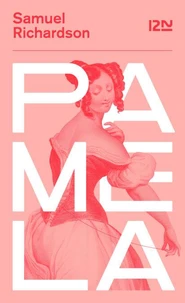
Pamela
E-book
9,99 €
5,72 €
19,99 €
19,99 €
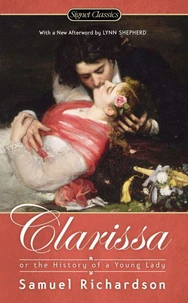
Clarissa
E-book
17,99 €
19,80 €
Pamela ou la Vertu récompensée
Grand Format
98,00 €

