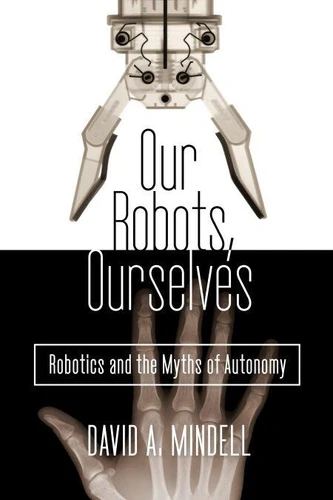
Our Robots, Ourselves. Robotics and the Myths of Autonomy
Par :Formats :
Disponible dans votre compte client Decitre ou Furet du Nord dès validation de votre commande. Le format ePub protégé est :
- Compatible avec une lecture sur My Vivlio (smartphone, tablette, ordinateur)
- Compatible avec une lecture sur liseuses Vivlio
- Pour les liseuses autres que Vivlio, vous devez utiliser le logiciel Adobe Digital Edition. Non compatible avec la lecture sur les liseuses Kindle, Remarkable et Sony
- Non compatible avec un achat hors France métropolitaine
 , qui est-ce ?
Notre partenaire de plateforme de lecture numérique où vous retrouverez l'ensemble de vos ebooks gratuitement
Pour en savoir plus sur nos ebooks, consultez notre aide en ligne ici
C'est si simple ! Lisez votre ebook avec l'app Vivlio sur votre tablette, mobile ou ordinateur :

- Nombre de pages208
- FormatePub
- ISBN978-0-698-15766-8
- EAN9780698157668
- Date de parution13/10/2015
- Protection num.Adobe DRM
- Taille4 Mo
- Infos supplémentairesepub
- ÉditeurViking
Résumé
"[An] essential book. it is required reading as we seriously engage one of the most important debates of our time."-Sherry Turkle, author of Reclaiming Conversation: The Power of Talk in a Digital AgeFrom drones to Mars rovers-an exploration of the most innovative use of robots today and a provocative argument for the crucial role of humans in our increasingly technological future. In Our Robots, Ourselves, David Mindell offers a fascinating behind-the-scenes look at the cutting edge of robotics today, debunking commonly held myths and exploring the rapidly changing relationships between humans and machines. Drawing on firsthand experience, extensive interviews, and the latest research from MIT and elsewhere, Mindell takes us to extreme environments-high atmosphere, deep ocean, and outer space-to reveal where the most advanced robotics already exist.
In these environments, scientists use robots to discover new information about ancient civilizations, to map some of the world's largest geological features, and even to "commute" to Mars to conduct daily experiments. But these tools of air, sea, and space also forecast the dangers, ethical quandaries, and unintended consequences of a future in which robotics and automation suffuse our everyday lives. Mindell argues that the stark lines we've drawn between human and not human, manual and automated, aren't helpful for understanding our relationship with robotics.
Brilliantly researched and accessibly written, Our Robots, Ourselves clarifies misconceptions about the autonomous robot, offering instead a hopeful message about what he calls "rich human presence" at the center of the technological landscape we are now creating.
In these environments, scientists use robots to discover new information about ancient civilizations, to map some of the world's largest geological features, and even to "commute" to Mars to conduct daily experiments. But these tools of air, sea, and space also forecast the dangers, ethical quandaries, and unintended consequences of a future in which robotics and automation suffuse our everyday lives. Mindell argues that the stark lines we've drawn between human and not human, manual and automated, aren't helpful for understanding our relationship with robotics.
Brilliantly researched and accessibly written, Our Robots, Ourselves clarifies misconceptions about the autonomous robot, offering instead a hopeful message about what he calls "rich human presence" at the center of the technological landscape we are now creating.