
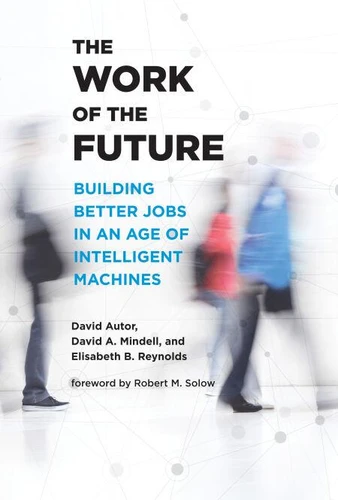
The Work of the Future. Building Better Jobs in an Age of Intelligent Machines
Par : , , ,Formats :
Disponible dans votre compte client Decitre ou Furet du Nord dès validation de votre commande. Le format ePub protégé est :
- Compatible avec une lecture sur My Vivlio (smartphone, tablette, ordinateur)
- Compatible avec une lecture sur liseuses Vivlio
- Pour les liseuses autres que Vivlio, vous devez utiliser le logiciel Adobe Digital Edition. Non compatible avec la lecture sur les liseuses Kindle, Remarkable et Sony
- Non compatible avec un achat hors France métropolitaine
 , qui est-ce ?
Notre partenaire de plateforme de lecture numérique où vous retrouverez l'ensemble de vos ebooks gratuitement
Pour en savoir plus sur nos ebooks, consultez notre aide en ligne ici
C'est si simple ! Lisez votre ebook avec l'app Vivlio sur votre tablette, mobile ou ordinateur :

- Nombre de pages192
- FormatePub
- ISBN978-0-262-36774-5
- EAN9780262367745
- Date de parution21/06/2022
- Protection num.Adobe DRM
- Taille685 Ko
- Infos supplémentairesepub
- ÉditeurThe MIT Press
Résumé
Why the United States lags behind other industrialized countries in sharing the benefits of innovation with workers and how we can remedy the problem. The United States has too many low-quality, low-wage jobs. Every country has its share, but those in the United States are especially poorly paid and often without benefits. Meanwhile, overall productivity increases steadily and new technology has transformed large parts of the economy, enhancing the skills and paychecks of higher paid knowledge workers.
What's wrong with this picture? Why have so many workers benefited so little from decades of growth? The Work of the Future shows that technology is neither the problem nor the solution. We can build better jobs if we create institutions that leverage technological innovation and also support workers though long cycles of technological transformation. Building on findings from the multiyear MIT Task Force on the Work of the Future, the book argues that we must foster institutional innovations that complement technological change.
Skills programs that emphasize work-based and hybrid learning (in person and online), for example, empower workers to become and remain productive in a continuously evolving workplace. Industries fueled by new technology that augments workers can supply good jobs, and federal investment in R&D can help make these industries worker-friendly. We must act to ensure that the labor market of the future offers benefits, opportunity, and a measure of economic security to all.
What's wrong with this picture? Why have so many workers benefited so little from decades of growth? The Work of the Future shows that technology is neither the problem nor the solution. We can build better jobs if we create institutions that leverage technological innovation and also support workers though long cycles of technological transformation. Building on findings from the multiyear MIT Task Force on the Work of the Future, the book argues that we must foster institutional innovations that complement technological change.
Skills programs that emphasize work-based and hybrid learning (in person and online), for example, empower workers to become and remain productive in a continuously evolving workplace. Industries fueled by new technology that augments workers can supply good jobs, and federal investment in R&D can help make these industries worker-friendly. We must act to ensure that the labor market of the future offers benefits, opportunity, and a measure of economic security to all.