
Prof. Dr. Michael Rohrschneider lehrt Geschichte der Frühen Neuzeit und Rheinische Landesgeschichte an der Universität Bonn. Er ist Leiter des Zentrums für Historische Friedensforschung.
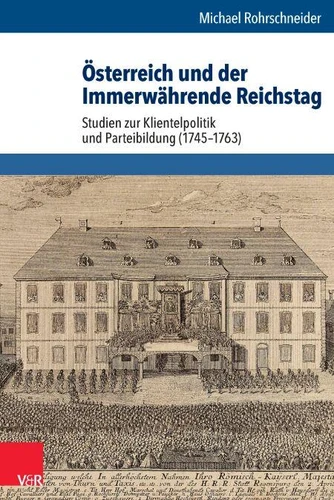
Österreich und der Immerwährende Reichstag. Studien zur Klientelpolitik und Parteibildung (1745–1763)
Par :Formats :
Disponible dans votre compte client Decitre ou Furet du Nord dès validation de votre commande. Le format PDF est :
- Compatible avec une lecture sur My Vivlio (smartphone, tablette, ordinateur)
- Compatible avec une lecture sur liseuses Vivlio
- Pour les liseuses autres que Vivlio, vous devez utiliser le logiciel Adobe Digital Edition. Non compatible avec la lecture sur les liseuses Kindle, Remarkable et Sony
 , qui est-ce ?
Notre partenaire de plateforme de lecture numérique où vous retrouverez l'ensemble de vos ebooks gratuitement
Pour en savoir plus sur nos ebooks, consultez notre aide en ligne ici
C'est si simple ! Lisez votre ebook avec l'app Vivlio sur votre tablette, mobile ou ordinateur :

- Nombre de pages395
- FormatPDF
- ISBN978-3-647-36079-9
- EAN9783647360799
- Date de parution17/09/2014
- Protection num.pas de protection
- Taille4 Mo
- Infos supplémentairespdf
- ÉditeurVandenhoeck & Ruprecht
Résumé
The Everlasting Imperial Diet (1663-1806), one of the central institutions of the Holy Roman Empire, was an important forum for the Viennese Court in building and maintaining a loyal following. It has been seen in a negative light by historical researchers for a long time. A number of points of departure for research have emerged particularly in the last few years, which, in a sense, paint a new" picture of the "old" Diet.
This is the framework in which the monograph should be seen. It shows, with a focus on the Austrian, and a comparative use of the Prussian politics, in which way this important institution was a locus of political patronage and one for the formation of "Partheyen" (parties). The Empire and Diet politics of the Viennese Court during the joint governance of Emperor Franz I. and Maria Theresia were a factor which should not be underestimated in significance within the structure of Imperial, or Austrian politics.
This is shown based on personal relations (clientele, patronage, interrelationships and "Partheyen"). It is important for the general context that, in this, it is not only source material of Austrian extraction that has been used, but also archive material that shed light on the perspective of the clientele and the party supporters. On the whole, the monograph makes a contribution to a better understanding of the political and social structures of the Old Empire.
"
This is the framework in which the monograph should be seen. It shows, with a focus on the Austrian, and a comparative use of the Prussian politics, in which way this important institution was a locus of political patronage and one for the formation of "Partheyen" (parties). The Empire and Diet politics of the Viennese Court during the joint governance of Emperor Franz I. and Maria Theresia were a factor which should not be underestimated in significance within the structure of Imperial, or Austrian politics.
This is shown based on personal relations (clientele, patronage, interrelationships and "Partheyen"). It is important for the general context that, in this, it is not only source material of Austrian extraction that has been used, but also archive material that shed light on the perspective of the clientele and the party supporters. On the whole, the monograph makes a contribution to a better understanding of the political and social structures of the Old Empire.
"
A propos de Michael Rohrschneider

120,00 €