This book emerges from a central premise: that every organ of the body carries not only a physiological function but a distinct energetic signature-a kind of vibrational identity that persists beyond its physical form. When illness arises, it is rarely confined to isolated tissues; rather, it is an orchestration of imbalances within systems, functions, and, ultimately, meaning. Homeopathy, in its original formulation, recognizes this interdependence and seeks to restore balance by working with the vital force-gently, precisely, and with profound respect for the individuality of each patient.
The present volume extends this logic to a relatively under-explored yet clinically potent realm: the use of sarcodes-remedies derived from healthy animal organs, glands, and secretions-as a structured system of organ-based homeopathic medicine. The material compiled herein is not speculative. It is grounded in over two centuries of homeopathic tradition, enriched by clinical experimentation, historical materia medica, and recent developments in organotherapy.
What is novel, however, is the comprehensiveness of scope. This work brings together, for the first time in one volume, an extended repertory of sarcodes-most of them bovine in origin-analyzed not merely by function but by psychological correspondence, constitutional application, and subtle energetic resonance. Each organ is treated as an archetype-its physiological role inseparable from its emotional and spiritual symbolism.
In doing so, this book proposes not just a catalogue of remedies but a way of thinking about the body as a constellation of intelligences, each deserving its own voice in the healing process. Homeopathy, as Hahnemann envisioned it, is not bound by the materialist constraints of modern pharmacology. It is a system of medicine that treats similitude and resonance, not force through similitude. And yet, within that system, there is room for specificity-for remedies that do not merely generalize but reflect back the precise organ-level disruption in the patient.
Sarcodes, in this sense, are not an anomaly but a logical evolution of homeopathic philosophy. By offering the energetic template of a healthy organ to a diseased or dysregulated counterpart, they act as both stimulus and guide-evoking the memory of optimal function and inviting the body to return to it. This book is not meant as a compendium of fixed prescriptions. It does not offer algorithms or therapeutic shortcuts.
Rather, it is a resource for practitioners, students, and serious researchers who wish to think more deeply about organ-based dysfunction and the remedies that may address it-not just mechanically, but constitutionally and energetically. The goal is to expand the practitioner's repertoire, to refine the art of remedy selection, and to contribute to the dialogue between classical homeopathy and contemporary clinical demands.
Sarcodes are not to be administered indiscriminately; like all potent substances, they require care, sensitivity, and discernment. But when applied with precision, they can act as profound agents of restoration.
This book emerges from a central premise: that every organ of the body carries not only a physiological function but a distinct energetic signature-a kind of vibrational identity that persists beyond its physical form. When illness arises, it is rarely confined to isolated tissues; rather, it is an orchestration of imbalances within systems, functions, and, ultimately, meaning. Homeopathy, in its original formulation, recognizes this interdependence and seeks to restore balance by working with the vital force-gently, precisely, and with profound respect for the individuality of each patient.
The present volume extends this logic to a relatively under-explored yet clinically potent realm: the use of sarcodes-remedies derived from healthy animal organs, glands, and secretions-as a structured system of organ-based homeopathic medicine. The material compiled herein is not speculative. It is grounded in over two centuries of homeopathic tradition, enriched by clinical experimentation, historical materia medica, and recent developments in organotherapy.
What is novel, however, is the comprehensiveness of scope. This work brings together, for the first time in one volume, an extended repertory of sarcodes-most of them bovine in origin-analyzed not merely by function but by psychological correspondence, constitutional application, and subtle energetic resonance. Each organ is treated as an archetype-its physiological role inseparable from its emotional and spiritual symbolism.
In doing so, this book proposes not just a catalogue of remedies but a way of thinking about the body as a constellation of intelligences, each deserving its own voice in the healing process. Homeopathy, as Hahnemann envisioned it, is not bound by the materialist constraints of modern pharmacology. It is a system of medicine that treats similitude and resonance, not force through similitude. And yet, within that system, there is room for specificity-for remedies that do not merely generalize but reflect back the precise organ-level disruption in the patient.
Sarcodes, in this sense, are not an anomaly but a logical evolution of homeopathic philosophy. By offering the energetic template of a healthy organ to a diseased or dysregulated counterpart, they act as both stimulus and guide-evoking the memory of optimal function and inviting the body to return to it. This book is not meant as a compendium of fixed prescriptions. It does not offer algorithms or therapeutic shortcuts.
Rather, it is a resource for practitioners, students, and serious researchers who wish to think more deeply about organ-based dysfunction and the remedies that may address it-not just mechanically, but constitutionally and energetically. The goal is to expand the practitioner's repertoire, to refine the art of remedy selection, and to contribute to the dialogue between classical homeopathy and contemporary clinical demands.
Sarcodes are not to be administered indiscriminately; like all potent substances, they require care, sensitivity, and discernment. But when applied with precision, they can act as profound agents of restoration.

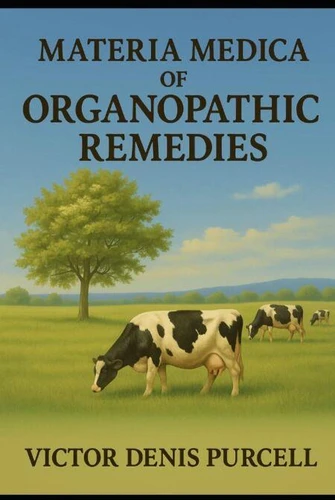
 , qui est-ce ?