Nouveauté
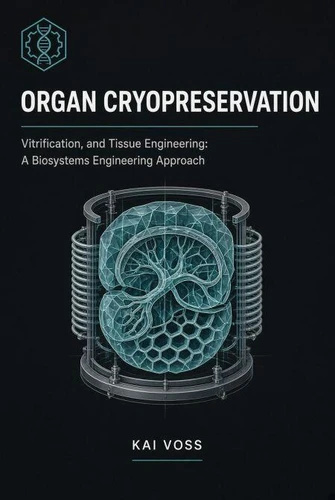
Organ Cryopreservation, Vitrification, and Tissue Engineering: A Biosystems Engineering Approach
Par :Formats :
Disponible dans votre compte client Decitre ou Furet du Nord dès validation de votre commande. Le format ePub est :
- Compatible avec une lecture sur My Vivlio (smartphone, tablette, ordinateur)
- Compatible avec une lecture sur liseuses Vivlio
- Pour les liseuses autres que Vivlio, vous devez utiliser le logiciel Adobe Digital Edition. Non compatible avec la lecture sur les liseuses Kindle, Remarkable et Sony
 , qui est-ce ?
Notre partenaire de plateforme de lecture numérique où vous retrouverez l'ensemble de vos ebooks gratuitement
Pour en savoir plus sur nos ebooks, consultez notre aide en ligne ici
C'est si simple ! Lisez votre ebook avec l'app Vivlio sur votre tablette, mobile ou ordinateur :

- FormatePub
- ISBN8235733862
- EAN9798235733862
- Date de parution12/08/2026
- Protection num.pas de protection
- Infos supplémentairesepub
- ÉditeurIoakim Ioakim
Résumé
Unlock the rigorous engineering principles behind cutting-edge bio-preservation, vitrification, and regenerative medicine. Designed for students, researchers, and professionals in biomedical engineering and biotechnology, Organ Cryopreservation, Vitrification, and Tissue Engineering: A Biosystems Engineering Approach bridges the gap between theoretical thermodynamics and clinical-grade organ banking.
Dive deep into the mechanical, thermal, and fluid-dynamic complexities of preserving complex multi-component tissue architectures. This comprehensive guide explores: The Thermodynamic Limits of Freezing: Moving beyond basic cell suspensions to understand why traditional slow-freezing methods fail at the macro-scale. Vascular Perfusion Physics: Mastering convective-diffusive mass transfer, high-molarity cryoprotective agent (CPA) delivery, and automated microfluidic step-down skids.
Vitrification Mechanics: Engineering the glass transition state, suppressing ice nucleation, and managing solution viscosity dynamics without inducing lethal cellular toxicity. Thermal Stress and Fracture Mechanics: Controlling differential thermal contraction, calculating critical crack propagation thresholds, and implementing polymer matrix additives to prevent micro-cracking. Nanoparticle-Assisted Rapid Warming: Utilizing superparamagnetic iron oxide nanoparticles (SPIONs) and alternating magnetic field (AMF) induction to achieve ultra-fast volumetric recovery past the devitrification danger zone.
Ischemic Mitigation and Cold Storage: Analyzing ATP depletion kinetics, the Arrhenius metabolic rate reduction, and hypothermic machine perfusion limits. Post-Thaw Reperfusion and Tissue Integration: Engineering osmotic buffer systems, restoring endothelial barrier function, and utilizing decellularized extracellular matrix scaffolds for whole-organ regeneration. Transform your understanding of biological stasis and discover how systems engineering is dismantling the temporal barriers of organ transplantation.
Whether you are designing advanced preservation hardware, modeling transient permeation kinetics, or building the future of global biobanking, this volume provides the definitive technical foundation.
Dive deep into the mechanical, thermal, and fluid-dynamic complexities of preserving complex multi-component tissue architectures. This comprehensive guide explores: The Thermodynamic Limits of Freezing: Moving beyond basic cell suspensions to understand why traditional slow-freezing methods fail at the macro-scale. Vascular Perfusion Physics: Mastering convective-diffusive mass transfer, high-molarity cryoprotective agent (CPA) delivery, and automated microfluidic step-down skids.
Vitrification Mechanics: Engineering the glass transition state, suppressing ice nucleation, and managing solution viscosity dynamics without inducing lethal cellular toxicity. Thermal Stress and Fracture Mechanics: Controlling differential thermal contraction, calculating critical crack propagation thresholds, and implementing polymer matrix additives to prevent micro-cracking. Nanoparticle-Assisted Rapid Warming: Utilizing superparamagnetic iron oxide nanoparticles (SPIONs) and alternating magnetic field (AMF) induction to achieve ultra-fast volumetric recovery past the devitrification danger zone.
Ischemic Mitigation and Cold Storage: Analyzing ATP depletion kinetics, the Arrhenius metabolic rate reduction, and hypothermic machine perfusion limits. Post-Thaw Reperfusion and Tissue Integration: Engineering osmotic buffer systems, restoring endothelial barrier function, and utilizing decellularized extracellular matrix scaffolds for whole-organ regeneration. Transform your understanding of biological stasis and discover how systems engineering is dismantling the temporal barriers of organ transplantation.
Whether you are designing advanced preservation hardware, modeling transient permeation kinetics, or building the future of global biobanking, this volume provides the definitive technical foundation.