SOLDES
Jusqu'à -70% sur une sélection d'articles*

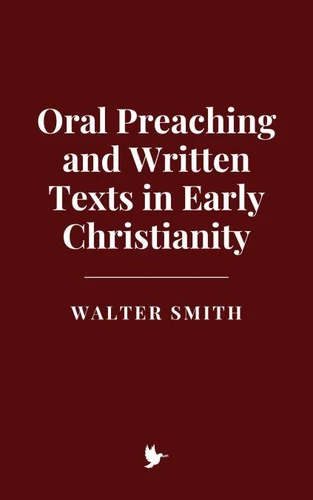
Oral Preaching and Written Texts in Early Christianity
Par :Formats :
Disponible dans votre compte client Decitre ou Furet du Nord dès validation de votre commande. Le format ePub est :
- Compatible avec une lecture sur My Vivlio (smartphone, tablette, ordinateur)
- Compatible avec une lecture sur liseuses Vivlio
- Pour les liseuses autres que Vivlio, vous devez utiliser le logiciel Adobe Digital Edition. Non compatible avec la lecture sur les liseuses Kindle, Remarkable et Sony
 , qui est-ce ?
Notre partenaire de plateforme de lecture numérique où vous retrouverez l'ensemble de vos ebooks gratuitement
Pour en savoir plus sur nos ebooks, consultez notre aide en ligne ici
C'est si simple ! Lisez votre ebook avec l'app Vivlio sur votre tablette, mobile ou ordinateur :

- FormatePub
- ISBN8227816061
- EAN9798227816061
- Date de parution13/01/2025
- Protection num.pas de protection
- Infos supplémentairesepub
- ÉditeurBig Dog Books, LLC
Résumé
The study of oral preaching and writing in early Christianity delves into one of the most critical aspects of the faith's emergence and expansion in the ancient Mediterranean world. This examination unveils a rich tapestry of religious, cultural, and intellectual traditions that interwove oral and written forms of communication. Christianity, from its inception, was fundamentally a religion of the spoken word.
Jesus of Nazareth, the central figure of the Christian faith, left no written record of his teachings; his message was conveyed through parables, sermons, and intimate conversations with his disciples. The early Christian movement, in its formative years, relied on the living voice-apostolic preaching and testimony that proclaimed the "good news" of Christ's life, death, and resurrection. However, as the movement expanded geographically and faced the challenges of persecution, doctrinal disputes, and generational change, the written word became increasingly vital to preserve and transmit the faith.
The coexistence of oral proclamation and textual composition was not unique to Christianity but reflected the broader Greco-Roman and Jewish cultural milieu. The ancient Mediterranean world operated largely as an oral society, despite the presence of sophisticated literary traditions. Memory, performance, and recitation were central to education, public discourse, and religious instruction. In this context, it is essential to understand how the early Christians adapted oral forms to their theological mission while simultaneously contributing to a textual legacy that would form the New Testament canon.
The dynamic interplay between oral tradition and written texts in early Christianity was shaped by historical circumstances, theological imperatives, and social factors, creating a complex narrative of continuity, adaptation, and innovation.
Jesus of Nazareth, the central figure of the Christian faith, left no written record of his teachings; his message was conveyed through parables, sermons, and intimate conversations with his disciples. The early Christian movement, in its formative years, relied on the living voice-apostolic preaching and testimony that proclaimed the "good news" of Christ's life, death, and resurrection. However, as the movement expanded geographically and faced the challenges of persecution, doctrinal disputes, and generational change, the written word became increasingly vital to preserve and transmit the faith.
The coexistence of oral proclamation and textual composition was not unique to Christianity but reflected the broader Greco-Roman and Jewish cultural milieu. The ancient Mediterranean world operated largely as an oral society, despite the presence of sophisticated literary traditions. Memory, performance, and recitation were central to education, public discourse, and religious instruction. In this context, it is essential to understand how the early Christians adapted oral forms to their theological mission while simultaneously contributing to a textual legacy that would form the New Testament canon.
The dynamic interplay between oral tradition and written texts in early Christianity was shaped by historical circumstances, theological imperatives, and social factors, creating a complex narrative of continuity, adaptation, and innovation.
A propos de Walter Smith


2,99 €


2,99 €

2,99 €


2,99 €

2,99 €

2,99 €

2,99 €


2,99 €


2,99 €


2,99 €