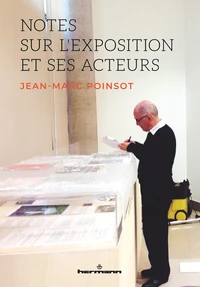
Here, the critic and art historian, Jean-Marc Poinsot, offers his commentaries on a sharp selection of works and exhibitions from the last twenty years, in which he focuses on the particular significance of works that 'think through' the problems of displaying art in a social context. As readers familiar with Poinsot's earlier books, L'atelier sans mur and Quand l'oeuvre a lieu, will have come to expect, the author brings a high degree of sensitivity and critical acumen to his analysis of the contribution that curators, from Jan Leering and Harald Szeemann to Laurent Le Bon and Jens Hoffmann and artists, from Daniel Buren and Michel Parmentier to Pierre Huyghe, have made to their exhibitions in New York, London, Kassel and Venice.
He is particularly interested in the ways artists take advantage of the freedoms they are afforded by the exhibition format and the languages ('authorised narratives') they use to describe their work. From there, he goes on to define an expanded understanding of the 'actors', as he calls them, that play a part in the constitution of a work of art.
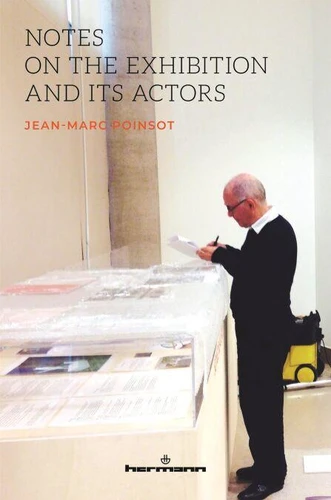
Here, the critic and art historian, Jean-Marc Poinsot, offers his commentaries on a sharp selection of works and exhibitions from the last twenty years, in which he focuses on the particular significance of works that 'think through' the problems of displaying art in a social context. As readers familiar with Poinsot's earlier books, L'atelier sans mur and Quand l'oeuvre a lieu, will have come to expect, the author brings a high degree of sensitivity and critical acumen to his analysis of the contribution that curators, from Jan Leering and Harald Szeemann to Laurent Le Bon and Jens Hoffmann and artists, from Daniel Buren and Michel Parmentier to Pierre Huyghe, have made to their exhibitions in New York, London, Kassel and Venice.
He is particularly interested in the ways artists take advantage of the freedoms they are afforded by the exhibition format and the languages ('authorised narratives') they use to describe their work. From there, he goes on to define an expanded understanding of the 'actors', as he calls them, that play a part in the constitution of a work of art.

 , qui est-ce ?