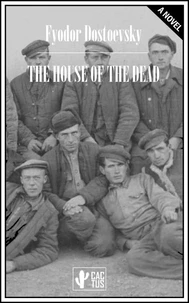
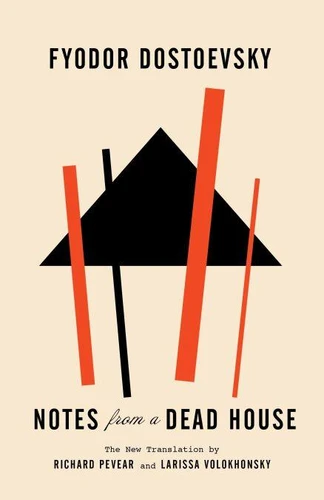
From the acclaimed translators Richard Pevear and Larissa Volokhonsky comes a new translation of the first great prison memoir: Fyodor Dostoevsky's fictionalized account of his life-changing penal servitude in Siberia. In 1849 Dostoevsky was sentenced to four years at hard labor in a Siberian prison camp for his participation in a utopian socialist discussion group. The account he wrote after his release, based on notes he smuggled out, was the first book to reveal life inside the Russian penal system.
The book not only brought him fame but also founded the tradition of Russian prison writing. Notes from a Dead House (sometimes translated as The House of the Dead) is filled with vivid details of brutal punishments, shocking conditions, feuds and betrayals, and the psychological effects of the loss of freedom, but it also describes moments of comedy and acts of kindness. There are grotesque bathhouse and hospital scenes that seem to have come straight from Dante's Inferno, alongside daring escape attempts, doomed acts of defiance, and a theatrical Christmas celebration that draws the entire community together in a temporary suspension of their grim reality.
To get past government censors, Dostoevsky made his narrator a common-law criminal rather than a political prisoner, but the perspective is unmistakably his own. His incarceration was a transformative experience that nourished all his later works, particularly Crime and Punishment. Dostoevsky's narrator discovers that even among the most debased criminals there are strong and beautiful souls. His story reveals the prison as a tragedy both for the inmates and for Russia; it is, finally, a profound meditation on freedom: "The prisoner himself knows that he is a prisoner; but no brands, no fetters will make him forget that he is a human being."
From the acclaimed translators Richard Pevear and Larissa Volokhonsky comes a new translation of the first great prison memoir: Fyodor Dostoevsky's fictionalized account of his life-changing penal servitude in Siberia. In 1849 Dostoevsky was sentenced to four years at hard labor in a Siberian prison camp for his participation in a utopian socialist discussion group. The account he wrote after his release, based on notes he smuggled out, was the first book to reveal life inside the Russian penal system.
The book not only brought him fame but also founded the tradition of Russian prison writing. Notes from a Dead House (sometimes translated as The House of the Dead) is filled with vivid details of brutal punishments, shocking conditions, feuds and betrayals, and the psychological effects of the loss of freedom, but it also describes moments of comedy and acts of kindness. There are grotesque bathhouse and hospital scenes that seem to have come straight from Dante's Inferno, alongside daring escape attempts, doomed acts of defiance, and a theatrical Christmas celebration that draws the entire community together in a temporary suspension of their grim reality.
To get past government censors, Dostoevsky made his narrator a common-law criminal rather than a political prisoner, but the perspective is unmistakably his own. His incarceration was a transformative experience that nourished all his later works, particularly Crime and Punishment. Dostoevsky's narrator discovers that even among the most debased criminals there are strong and beautiful souls. His story reveals the prison as a tragedy both for the inmates and for Russia; it is, finally, a profound meditation on freedom: "The prisoner himself knows that he is a prisoner; but no brands, no fetters will make him forget that he is a human being."


 , qui est-ce ?