In Harrow Falls, the spirits are never wrong. Every Sunday the circle gathers in Eudora Marsh's warm parlor, and sometimes the voice in the dark names a person who is going to die. Weeks later, that person dies. A fall. A drowning. A strong man's heart stopped quietly in his sleep. The mill doctor signs the certificate, the town shakes its head at the sadness of it, and everyone carries a casserole to the widow.
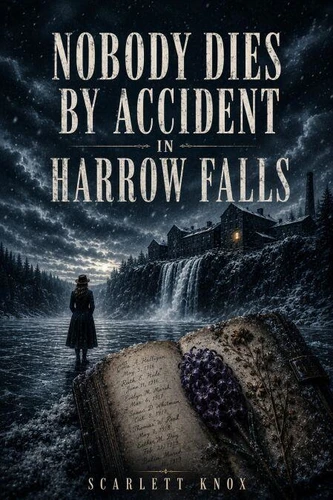
Marion Reese knows better. She has spent sixteen years tearing the curtains off fraudulent mediums, and she came to this dying mill town because a woman named Cora Halligan wrote and begged her to come. Cora was pulled out of the wheel pit three days before Marion's train arrived. Misadventure, the constable said. The ice is treacherous this time of year. Cora left a notebook sewn into the lining of her coat.
A column of the dead. Pressed flowers gone brown between the pages. And one word, written again and again down the years: garden. It takes Marion far too long to understand what she is looking at. The prophecies are not predictions. They are orders. The flowers are names. And the whole town has been paying for them, in coin and in grief, for thirty years. But the woman who built this thing has been watching Marion for a very long while.
She knows what Marion was before she was famous. She knows about the back room, and the low lamp, and the small girl who said whatever the hand on her neck told her to say. And she knows one thing more, which she has not yet decided whether to tell. The river freezes in November. It will not hold past February. And when it breaks, everything in Harrow Falls comes up with it.
In Harrow Falls, the spirits are never wrong. Every Sunday the circle gathers in Eudora Marsh's warm parlor, and sometimes the voice in the dark names a person who is going to die. Weeks later, that person dies. A fall. A drowning. A strong man's heart stopped quietly in his sleep. The mill doctor signs the certificate, the town shakes its head at the sadness of it, and everyone carries a casserole to the widow.
Marion Reese knows better. She has spent sixteen years tearing the curtains off fraudulent mediums, and she came to this dying mill town because a woman named Cora Halligan wrote and begged her to come. Cora was pulled out of the wheel pit three days before Marion's train arrived. Misadventure, the constable said. The ice is treacherous this time of year. Cora left a notebook sewn into the lining of her coat.
A column of the dead. Pressed flowers gone brown between the pages. And one word, written again and again down the years: garden. It takes Marion far too long to understand what she is looking at. The prophecies are not predictions. They are orders. The flowers are names. And the whole town has been paying for them, in coin and in grief, for thirty years. But the woman who built this thing has been watching Marion for a very long while.
She knows what Marion was before she was famous. She knows about the back room, and the low lamp, and the small girl who said whatever the hand on her neck told her to say. And she knows one thing more, which she has not yet decided whether to tell. The river freezes in November. It will not hold past February. And when it breaks, everything in Harrow Falls comes up with it.

 , qui est-ce ?