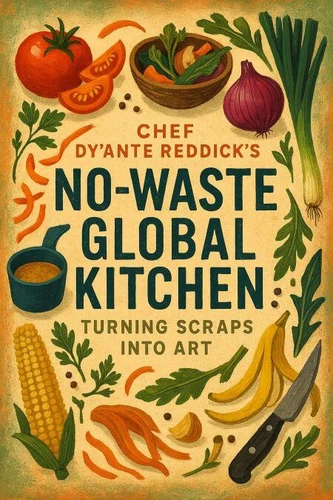
There's a moment in every chef's journey when cooking becomes more than feeding people - it becomes a conversation with the ingredients themselves. No-Waste Global Kitchen: Turning Scraps into Art was born from that realization: that true culinary excellence isn't about abundance, but about respect. After decades in kitchens around the world, I began to see how much possibility was being thrown away - carrot tops that could've been pesto, bones that could've become broth, fruit that only needed a second chance to shine.
Waste, I realized, isn't about scraps; it's about imagination. When we stop seeing potential, we stop creating. This book isn't just a collection of recipes - it's a philosophy. It teaches you to look again at what's left behind and ask, "What's still possible?" From universal stocks and scrap bouillons to fruit rescues and second-day soups, every page is a lesson in patience, resourcefulness, and flavor.
You'll learn not only how to reuse ingredients, but how to reframe your mindset - to treat waste as raw material for creativity. In kitchens from Miami to the Caribbean, I've watched cooks and leaders rediscover joy by re-learning respect. A no-waste kitchen isn't about saving money; it's about cultivating pride. It's about showing your team that sustainability and excellence are partners, not opposites.
It's about building a culture where awareness replaces habit and gratitude drives every motion. The techniques are simple but powerful - sweating onions slowly, blooming spices to wake their oils, roasting bones until they whisper depth. But beneath every method is a message: flavor lives in the details. When you take the time to listen to your food, it teaches you discipline, patience, and empathy - the same traits that define true leadership.
Whether you're a professional chef, a student, or simply someone who loves the craft of cooking, No-Waste Global Kitchen will change how you see your ingredients - and yourself. Because once you learn to create meaning from what others overlook, nothing in your kitchen - and no one in your team - will ever feel wasted again.
There's a moment in every chef's journey when cooking becomes more than feeding people - it becomes a conversation with the ingredients themselves. No-Waste Global Kitchen: Turning Scraps into Art was born from that realization: that true culinary excellence isn't about abundance, but about respect. After decades in kitchens around the world, I began to see how much possibility was being thrown away - carrot tops that could've been pesto, bones that could've become broth, fruit that only needed a second chance to shine.
Waste, I realized, isn't about scraps; it's about imagination. When we stop seeing potential, we stop creating. This book isn't just a collection of recipes - it's a philosophy. It teaches you to look again at what's left behind and ask, "What's still possible?" From universal stocks and scrap bouillons to fruit rescues and second-day soups, every page is a lesson in patience, resourcefulness, and flavor.
You'll learn not only how to reuse ingredients, but how to reframe your mindset - to treat waste as raw material for creativity. In kitchens from Miami to the Caribbean, I've watched cooks and leaders rediscover joy by re-learning respect. A no-waste kitchen isn't about saving money; it's about cultivating pride. It's about showing your team that sustainability and excellence are partners, not opposites.
It's about building a culture where awareness replaces habit and gratitude drives every motion. The techniques are simple but powerful - sweating onions slowly, blooming spices to wake their oils, roasting bones until they whisper depth. But beneath every method is a message: flavor lives in the details. When you take the time to listen to your food, it teaches you discipline, patience, and empathy - the same traits that define true leadership.
Whether you're a professional chef, a student, or simply someone who loves the craft of cooking, No-Waste Global Kitchen will change how you see your ingredients - and yourself. Because once you learn to create meaning from what others overlook, nothing in your kitchen - and no one in your team - will ever feel wasted again.