SOLDES
Jusqu'à -70% sur une sélection d'articles*
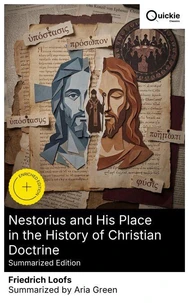
Nestorius and His Place in the History of Christian Doctrine
Par :Formats :
Disponible dans votre compte client Decitre ou Furet du Nord dès validation de votre commande. Le format ePub est :
- Compatible avec une lecture sur My Vivlio (smartphone, tablette, ordinateur)
- Compatible avec une lecture sur liseuses Vivlio
- Pour les liseuses autres que Vivlio, vous devez utiliser le logiciel Adobe Digital Edition. Non compatible avec la lecture sur les liseuses Kindle, Remarkable et Sony
 , qui est-ce ?
Notre partenaire de plateforme de lecture numérique où vous retrouverez l'ensemble de vos ebooks gratuitement
Pour en savoir plus sur nos ebooks, consultez notre aide en ligne ici
C'est si simple ! Lisez votre ebook avec l'app Vivlio sur votre tablette, mobile ou ordinateur :

- Nombre de pages95
- FormatePub
- ISBN859-65--4771960-1
- EAN8596547719601
- Date de parution12/11/2023
- Protection num.Digital Watermarking
- Taille526 Ko
- Infos supplémentairesepub
- ÉditeurDIGICAT
Résumé
In "Nestorius and His Place in the History of Christian Doctrine, " Friedrich Loofs offers a meticulous examination of Nestorius, the controversial 5th-century patriarch of Constantinople, and the theological debates surrounding his teachings. Loofs employs a blend of historical narrative and critical analysis, situating Nestorius within the broader context of early Christian doctrinal disputes. His literary style, characterized by erudition and clarity, illuminates the complexities of Nestorian beliefs, particularly the Christological controversies and their implications for later theological developments.
This work serves as an invaluable resource for understanding the intersections of faith, politics, and ecclesiastical authority during a pivotal moment in Christian history. Friedrich Loofs, a prominent theologian and historian of the early 20th century, dedicated his scholarly career to exploring Christian doctrine with a focus on early church figures. His rigorous training in philology and theology, combined with a deep commitment to understanding the historical context of Christian thought, informs his analysis of Nestorius.
Loofs's work reflects a nuanced understanding of the influences that shaped Nestorius's theological outlook and the subsequent repercussions within ecclesiastical circles. This book is essential for scholars, theologians, and students alike who seek to grasp the complexities of early Christian doctrine. Loofs provides a compelling narrative that not only informs but also invites reflection on the enduring implications of Nestorius's legacy in contemporary theology.
Readers will appreciate the depth and insight Loofs brings to a figure whose ideas continue to provoke discussion in modern Christian thought.
This work serves as an invaluable resource for understanding the intersections of faith, politics, and ecclesiastical authority during a pivotal moment in Christian history. Friedrich Loofs, a prominent theologian and historian of the early 20th century, dedicated his scholarly career to exploring Christian doctrine with a focus on early church figures. His rigorous training in philology and theology, combined with a deep commitment to understanding the historical context of Christian thought, informs his analysis of Nestorius.
Loofs's work reflects a nuanced understanding of the influences that shaped Nestorius's theological outlook and the subsequent repercussions within ecclesiastical circles. This book is essential for scholars, theologians, and students alike who seek to grasp the complexities of early Christian doctrine. Loofs provides a compelling narrative that not only informs but also invites reflection on the enduring implications of Nestorius's legacy in contemporary theology.
Readers will appreciate the depth and insight Loofs brings to a figure whose ideas continue to provoke discussion in modern Christian thought.