SOLDES
Jusqu'à -70% sur une sélection d'articles*

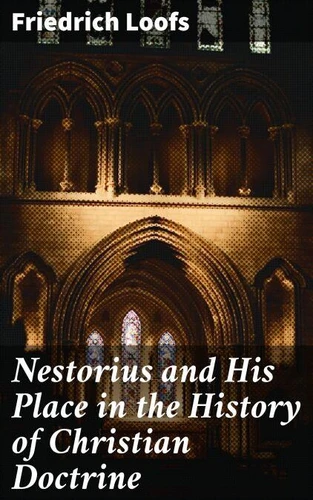
Nestorius and His Place in the History of Christian Doctrine. Unraveling the Controversies of Early Christian Theology
Par :Formats :
Disponible dans votre compte client Decitre ou Furet du Nord dès validation de votre commande. Le format ePub est :
- Compatible avec une lecture sur My Vivlio (smartphone, tablette, ordinateur)
- Compatible avec une lecture sur liseuses Vivlio
- Pour les liseuses autres que Vivlio, vous devez utiliser le logiciel Adobe Digital Edition. Non compatible avec la lecture sur les liseuses Kindle, Remarkable et Sony
 , qui est-ce ?
Notre partenaire de plateforme de lecture numérique où vous retrouverez l'ensemble de vos ebooks gratuitement
Pour en savoir plus sur nos ebooks, consultez notre aide en ligne ici
C'est si simple ! Lisez votre ebook avec l'app Vivlio sur votre tablette, mobile ou ordinateur :

- Nombre de pages95
- FormatePub
- ISBN406-4-06-606514-0
- EAN4064066065140
- Date de parution08/12/2020
- Protection num.Digital Watermarking
- Taille578 Ko
- Infos supplémentairesepub
- ÉditeurGOOD PRESS
Résumé
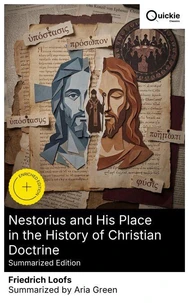
In "Nestorius and His Place in the History of Christian Doctrine, " Friedrich Loofs offers a comprehensive examination of Nestorius, the fifth-century theologian whose views on Christology ignited considerable debate within early Christianity. Written in a scholarly yet accessible style, Loofs meticulously analyzes Nestorius's theological positions, particularly his understanding of the duality of Christ's nature, and situates them within the rich context of early Christian doctrine.
The book serves as both a historical account and a critical assessment, drawing on a wealth of primary sources and previous scholarly works to illustrate the complexities surrounding Nestorius's life and legacy, particularly regarding the Council of Ephesus in 431 AD. Friedrich Loofs, a distinguished historian of early Christianity, draws from his extensive expertise in theological studies and patristics to construct this nuanced narrative.
His academic background, which includes significant contributions to the fields of church history and systematic theology, provides him with a unique lens through which to interpret Nestorius's thoughts and the subsequent doctrinal controversies. Loofs's critical eye and dedication to scholarly rigor are evident throughout the work, shedding light on the often-misunderstood figure of Nestorius. This book is highly recommended for students of theology, church history, and those interested in the development of early Christian doctrine.
Loofs'Äôs insightful analysis not only educates readers on the controversial themes surrounding Nestorius but also encourages contemplation of the broader implications of Christological debates in shaping Christian orthodoxy.
The book serves as both a historical account and a critical assessment, drawing on a wealth of primary sources and previous scholarly works to illustrate the complexities surrounding Nestorius's life and legacy, particularly regarding the Council of Ephesus in 431 AD. Friedrich Loofs, a distinguished historian of early Christianity, draws from his extensive expertise in theological studies and patristics to construct this nuanced narrative.
His academic background, which includes significant contributions to the fields of church history and systematic theology, provides him with a unique lens through which to interpret Nestorius's thoughts and the subsequent doctrinal controversies. Loofs's critical eye and dedication to scholarly rigor are evident throughout the work, shedding light on the often-misunderstood figure of Nestorius. This book is highly recommended for students of theology, church history, and those interested in the development of early Christian doctrine.
Loofs'Äôs insightful analysis not only educates readers on the controversial themes surrounding Nestorius but also encourages contemplation of the broader implications of Christological debates in shaping Christian orthodoxy.