SOLDES
Jusqu'à -70% sur une sélection d'articles*

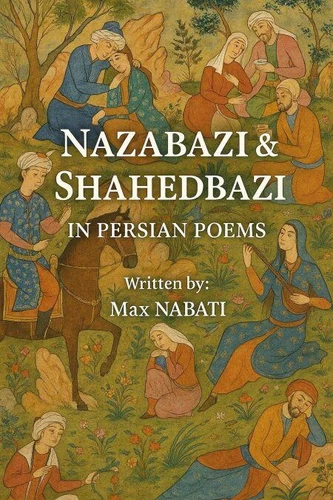
Nazarbazi & Shahedbazi in Persian poems
Par :Formats :
Disponible dans votre compte client Decitre ou Furet du Nord dès validation de votre commande. Le format ePub est :
- Compatible avec une lecture sur My Vivlio (smartphone, tablette, ordinateur)
- Compatible avec une lecture sur liseuses Vivlio
- Pour les liseuses autres que Vivlio, vous devez utiliser le logiciel Adobe Digital Edition. Non compatible avec la lecture sur les liseuses Kindle, Remarkable et Sony
 , qui est-ce ?
Notre partenaire de plateforme de lecture numérique où vous retrouverez l'ensemble de vos ebooks gratuitement
Pour en savoir plus sur nos ebooks, consultez notre aide en ligne ici
C'est si simple ! Lisez votre ebook avec l'app Vivlio sur votre tablette, mobile ou ordinateur :

- FormatePub
- ISBN8232201869
- EAN9798232201869
- Date de parution22/09/2025
- Protection num.pas de protection
- Infos supplémentairesepub
- ÉditeurDraft2Digital
Résumé
"Nazarbazi & Shahedbazi in Persian Poems" by Max Nabati is a comprehensive 361-page exploration of two significant concepts deeply embedded in the rich tapestry of Persian literature. Dedicated to Saadi, the master of Persian poetry, this work delves into the intricate themes of "Nazarbazi" and "Shahedbazi, " offering a detailed linguistic and semantic analysis of their roles in classical poetry. The book begins with an introduction to these terms, setting the stage for a journey through cultural, historical, and poetic dimensions."Nazarbazi, " translating to "the game of the eye" or "play of the eye, " is portrayed as a traditional Iranian practice, particularly among women, where subtle glances and eye contact serve as a form of flirtation or courtship.
This non-verbal communication transcends spoken words, emphasizing the eye as a powerful symbol of beauty and desire. The text highlights its association with courtly love, where the beloved's gaze becomes an object of worship, blending allure with unattainable beauty. Key poets like Hafez, Rumi, Omar Khayyam, Saadi, and Saeb Tabrizi are examined for their use of Nazarbazi, with themes such as symbolism of the eye, non-verbal communication, and metaphysical dimensions explored in depth.
In contrast, "Shahedbazi" combines themes of beauty, love, and often the divine or spiritual, with "shahed" meaning "witness" or "beloved" and "bazi" denoting "play" or "engagement." This concept is prevalent in Persian poetry, where poets engage with the beloved through rich imagery and metaphor, often pursuing spiritual truths alongside romantic and sexual undertones. The book differentiates the two terms, noting that while Nazarbazi focuses on the act of observing and visual beauty, Shahedbazi encompasses deeper emotional and romantic interactions, with a more pronounced sexual connotation.
The work also addresses Nazarbazi within the context of same-sex desire among old gay poets, exploring subtle expressions of love, idealization of beauty, and camaraderie. It includes a review of previous research by scholars like Ahmad Karimi-Hakkak, William L. Hanaway, and Sirus Shamisa, alongside references to the Ganjoor website and an extensive collection of related poems. With its detailed analysis and cultural insights, this book serves as a valuable resource for understanding the nuanced interplay of love, beauty, and spirituality in Persian poetry.
This non-verbal communication transcends spoken words, emphasizing the eye as a powerful symbol of beauty and desire. The text highlights its association with courtly love, where the beloved's gaze becomes an object of worship, blending allure with unattainable beauty. Key poets like Hafez, Rumi, Omar Khayyam, Saadi, and Saeb Tabrizi are examined for their use of Nazarbazi, with themes such as symbolism of the eye, non-verbal communication, and metaphysical dimensions explored in depth.
In contrast, "Shahedbazi" combines themes of beauty, love, and often the divine or spiritual, with "shahed" meaning "witness" or "beloved" and "bazi" denoting "play" or "engagement." This concept is prevalent in Persian poetry, where poets engage with the beloved through rich imagery and metaphor, often pursuing spiritual truths alongside romantic and sexual undertones. The book differentiates the two terms, noting that while Nazarbazi focuses on the act of observing and visual beauty, Shahedbazi encompasses deeper emotional and romantic interactions, with a more pronounced sexual connotation.
The work also addresses Nazarbazi within the context of same-sex desire among old gay poets, exploring subtle expressions of love, idealization of beauty, and camaraderie. It includes a review of previous research by scholars like Ahmad Karimi-Hakkak, William L. Hanaway, and Sirus Shamisa, alongside references to the Ganjoor website and an extensive collection of related poems. With its detailed analysis and cultural insights, this book serves as a valuable resource for understanding the nuanced interplay of love, beauty, and spirituality in Persian poetry.
A propos de Max Nabati
The Marble Winter
E-book
2,99 €


3,49 €

The Salt Wind of Khark
E-book
4,49 €
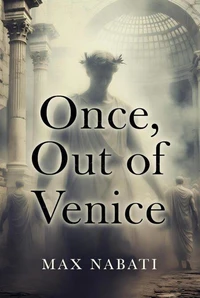
Once, Out of Venice
E-book
3,49 €

The Cube Of Wishes
E-book
8,49 €
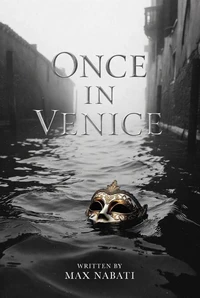
Once, in Venice
E-book
3,49 €
8,49 €

The Forty-Minutes Sunset
E-book
3,49 €
2,99 €

3,49 €

3,49 €

The Cebu Hours
E-book
4,49 €
2,99 €

Down Under, Down Below
E-book
2,99 €

6,99 €