History remembers Zeus as the king of the gods. The thunderbolt. The ruler of Olympus. The serial adulterer. The man responsible for half of Greek mythology's family problems. If that's the whole story, then perhaps the verdict has already been reached. It isn't the whole story. Zeus has always believed he was doing the right thing. A king should be fair. Listen carefully. Divide evenly. Favor no one.
Whether settling disputes between gods, judging mortals, or governing the cosmos itself, he has spent eternity convinced that treating everyone equally was the closest thing to love a ruler could offer. But as he revisits the moments that defined Olympus-from overthrowing Cronus and reshaping the world to Prometheus, Pandora, Hera, and the children who grew up around a father who was always present for everyone except them-he begins to recognize a pattern that fairness alone could never reveal.
The people closest to him never wanted another wise decision. They wanted him. For the first time, the god who has spent an eternity governing a universe must learn that justice cannot substitute for intimacy, that leadership is not measured only by how evenly you treat strangers, and that love sometimes demands choosing a specific person over the perfectly balanced answer. Some mistakes cannot be undone.
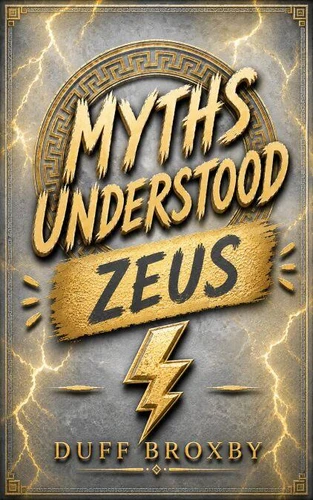
They can only be practiced differently, one conversation at a time. MYTHSUNDERSTOOD: ZEUS is the king of the gods' own account of power, fatherhood, responsibility, and the painful discovery that being fair to everyone is not the same as being there for the people who needed you most. It is a story about leadership, love, and learning that wisdom begins where certainty ends.
History remembers Zeus as the king of the gods. The thunderbolt. The ruler of Olympus. The serial adulterer. The man responsible for half of Greek mythology's family problems. If that's the whole story, then perhaps the verdict has already been reached. It isn't the whole story. Zeus has always believed he was doing the right thing. A king should be fair. Listen carefully. Divide evenly. Favor no one.
Whether settling disputes between gods, judging mortals, or governing the cosmos itself, he has spent eternity convinced that treating everyone equally was the closest thing to love a ruler could offer. But as he revisits the moments that defined Olympus-from overthrowing Cronus and reshaping the world to Prometheus, Pandora, Hera, and the children who grew up around a father who was always present for everyone except them-he begins to recognize a pattern that fairness alone could never reveal.
The people closest to him never wanted another wise decision. They wanted him. For the first time, the god who has spent an eternity governing a universe must learn that justice cannot substitute for intimacy, that leadership is not measured only by how evenly you treat strangers, and that love sometimes demands choosing a specific person over the perfectly balanced answer. Some mistakes cannot be undone.
They can only be practiced differently, one conversation at a time. MYTHSUNDERSTOOD: ZEUS is the king of the gods' own account of power, fatherhood, responsibility, and the painful discovery that being fair to everyone is not the same as being there for the people who needed you most. It is a story about leadership, love, and learning that wisdom begins where certainty ends.


 , qui est-ce ?