
Nouveauté
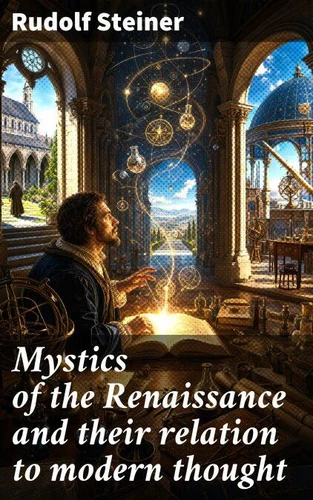
Mystics of the Renaissance and their relation to modern thought. Meister Eckhart, Tauler, Paracelsus, Jacob Boehme, Giordano Bruno…
Par : , ,Formats :
Disponible dans votre compte client Decitre ou Furet du Nord dès validation de votre commande. Le format ePub est :
- Compatible avec une lecture sur My Vivlio (smartphone, tablette, ordinateur)
- Compatible avec une lecture sur liseuses Vivlio
- Pour les liseuses autres que Vivlio, vous devez utiliser le logiciel Adobe Digital Edition. Non compatible avec la lecture sur les liseuses Kindle, Remarkable et Sony
 , qui est-ce ?
Notre partenaire de plateforme de lecture numérique où vous retrouverez l'ensemble de vos ebooks gratuitement
Pour en savoir plus sur nos ebooks, consultez notre aide en ligne ici
C'est si simple ! Lisez votre ebook avec l'app Vivlio sur votre tablette, mobile ou ordinateur :

- Nombre de pages101
- FormatePub
- ISBN859-65--4790498-4
- EAN8596547904984
- Date de parution29/06/2026
- Protection num.Digital Watermarking
- Taille679 Ko
- Infos supplémentairesepub
- ÉditeurGOOD PRESS
Résumé
In Mystics of the Renaissance and their relation to modern thought, Rudolf Steiner offers an interpretive study of key spiritual and philosophical figures-among them Meister Eckhart, Tauler, Paracelsus, Jacob Boehme, and Giordano Bruno-to trace the transition from medieval inwardness to modern self-conscious thought. The book is neither a conventional history nor a devotional anthology; rather, it is a philosophically charged meditation on how mystical experience, speculative theology, and emerging individualism shaped the modern mind.
Steiner's style is dense yet lucid, combining intellectual history with metaphysical interpretation. Steiner, an Austrian philosopher, esoteric thinker, and founder of anthroposophy, was deeply concerned with reconciling spiritual knowledge and modern consciousness. His training in philosophy and science, together with his engagement with Goethe, German Idealism, and Christian mysticism, clearly informs this work.
He reads Renaissance mystics not as relics of a superseded worldview, but as necessary precursors to a renewed spiritual understanding adequate to modernity. This book will especially reward readers interested in Western esotericism, the history of ideas, theology, and philosophy. It is best approached by those willing to follow subtle arguments, and it remains valuable as a provocative, learned account of how mystical thought continues to illuminate modern intellectual life.
Steiner's style is dense yet lucid, combining intellectual history with metaphysical interpretation. Steiner, an Austrian philosopher, esoteric thinker, and founder of anthroposophy, was deeply concerned with reconciling spiritual knowledge and modern consciousness. His training in philosophy and science, together with his engagement with Goethe, German Idealism, and Christian mysticism, clearly informs this work.
He reads Renaissance mystics not as relics of a superseded worldview, but as necessary precursors to a renewed spiritual understanding adequate to modernity. This book will especially reward readers interested in Western esotericism, the history of ideas, theology, and philosophy. It is best approached by those willing to follow subtle arguments, and it remains valuable as a provocative, learned account of how mystical thought continues to illuminate modern intellectual life.
A propos de Rudolf Steiner


2,99 €







3,49 €

0,99 €