


Nouveauté
Offrir maintenant
Ou planifier dans votre panier
Disponible dans votre compte client Decitre ou Furet du Nord dès validation de votre commande. Le format ePub protégé est :
  • Compatible avec une lecture sur My Vivlio (smartphone, tablette, ordinateur)
  • Compatible avec une lecture sur liseuses Vivlio
  • Pour les liseuses autres que Vivlio, vous devez utiliser le logiciel Adobe Digital Edition. Non compatible avec la lecture sur les liseuses Kindle, Remarkable et Sony
  • Non compatible avec un achat hors France métropolitaine
Logo Vivlio, qui est-ce ?

Notre partenaire de plateforme de lecture numérique où vous retrouverez l'ensemble de vos ebooks gratuitement

Pour en savoir plus sur nos ebooks, consultez notre aide en ligne ici
C'est si simple ! Lisez votre ebook avec l'app Vivlio sur votre tablette, mobile ou ordinateur :
Google PlayApp Store
  • Nombre de pages112
  • FormatePub
  • ISBN978-618-5369-97-2
  • EAN9786185369972
  • Date de parution15/07/2026
  • Protection num.Adobe DRM
  • Taille8 Mo
  • Infos supplémentairesepub
  • ÉditeurEditions Aiora

Résumé

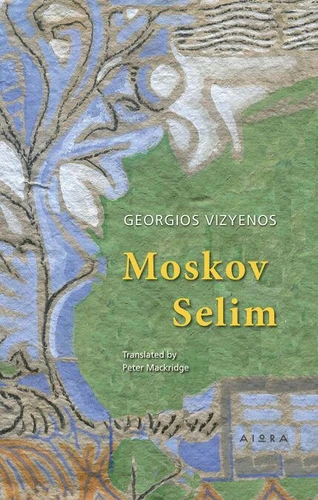
Georgios Vizyenos (1849-1896) is one of Greece's best-loved writers. Moskov Selim is set in Thrace, a corner of Europe where Greece, Turkey and Bulgaria meet. Selim is a Muslim name, yet "Moskov" implies that he is a Russian. Vizyenos' fascinating and moving story is set during a time of constant wars between Russians and Turks whose outcome would decide the future of south-east Europe: Serbia, Romania and Bulgaria were becoming independent of the Ottoman empire, while Greece was to gain huge territories at the empire's expense.
Although Istanbul would remain in Turkey, it would no longer be the seat of the Ottoman Sultan, who, as caliph, was the leader of the world's Muslims. Vizyenos' story evokes a time when Greeks and Turks could share each other's joys and pains despite the hostile relations between their governments. Listening to the protagonist's life story, the narrator of Moskov Selim discovers that this Turk is a kindred spirit, despite the gulf of nationality and religion that separates them.
Refined language and close observations mark Vizyenos's dense prose. Charged with strong emotions and a love of nature, it is a triumph that the stories' romanticism comes across fresh and true today. The demanding, complex tales are replete with character development, probing psychology and detailed descriptions. - Publishers Weekly Vizyenos brings into question the nature of identity and of reality as constructed by reason and senses. - Roderick Beaton An Introduction to Modern Greek Literature
Georgios Vizyenos was born in 1849 in the small town of Vizye (Vize in Turkish), to the north-west of Constantinople (Istanbul). His whole life was a struggle with family and personal tragedy. His father died when the boy was five years old; two of his sisters perished in early childhood; and one of his brothers died in mysterious circumstances. Despite these inauspicious beginnings, he studied in Germany and became one of the leading Greek poets and short-story writers.
Eventually, however, his psychological traumas took their toll, and he spent his last four years in Daphni mental asylum, where he died in 1896. Peter Mackridge (1946-2022) was a distinguished scholar and translator of modern Greek literature. He was a professor of Modern Greek at the University of Oxford and published several books on modern Greek language and literature, including two co-authored grammars.
His most recent translations, of stories by the nineteenth-century authors Georgios Vizyenos and Alexandros Papadiamandis and a collection of haikus by the twenty-first-century poet Haris Vlavianos were published in 2014-15.
Thracian Tales
Georgios Vizyenos, Peter Mackridge, Panagiotis Stavropoulos
E-book
9,99 €