SOLDES
Jusqu'à -70% sur une sélection d'articles*

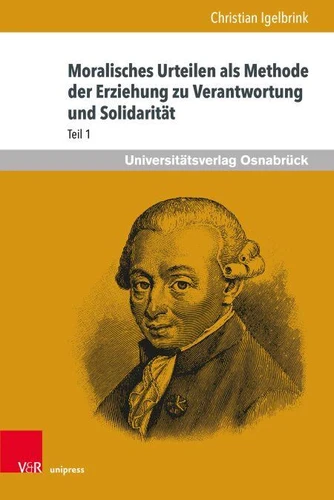
Moralisches Urteilen als Methode der Erziehung zu Verantwortung und Solidarität. Ethische Grundlegung, erziehungstheoretische Einordnung und didaktische Konzeptualisierung eines regelbasierten Modells moralischer Urteilsbildung
Par :Formats :
Disponible dans votre compte client Decitre ou Furet du Nord dès validation de votre commande. Le format PDF est :
- Compatible avec une lecture sur My Vivlio (smartphone, tablette, ordinateur)
- Compatible avec une lecture sur liseuses Vivlio
- Pour les liseuses autres que Vivlio, vous devez utiliser le logiciel Adobe Digital Edition. Non compatible avec la lecture sur les liseuses Kindle, Remarkable et Sony
 , qui est-ce ?
Notre partenaire de plateforme de lecture numérique où vous retrouverez l'ensemble de vos ebooks gratuitement
Pour en savoir plus sur nos ebooks, consultez notre aide en ligne ici
C'est si simple ! Lisez votre ebook avec l'app Vivlio sur votre tablette, mobile ou ordinateur :

- Nombre de pages1068
- FormatPDF
- ISBN978-3-8470-1970-1
- EAN9783847019701
- Date de parution20/04/2026
- Protection num.pas de protection
- Taille10 Mo
- Infos supplémentairespdf
- ÉditeurV&R Unipress
Résumé
Angesichts der curricularen wie auch der didaktischen Debatte dürfte die Entwicklung von Urteilskompetenz bzw. Urteilskraft als zentrales Bildungsziel pädagogischen Handelns außer Frage stehen. Vor diesem Hintergrund besteht das Hauptanliegen der vorliegenden Arbeit darin aufzuzeigen, wie verantwortliche Urteilsbildung - und zwar sowohl hinsichtlich ihrer Sach- und Wertebene als auch insbesondere ihrer moralischen Dimension - in Lehr-Lern-Situationen initiiert und gefördert werden kann.
Zu diesem Zweck entwickelt Christian Igelbrink eine dreiteilige Argumentation, deren Ziel es ist, moralische bzw. politisch-moralische Urteilsbildung ethisch zu begründen, erziehungstheoretisch zu verorten sowie im Bewusstsein pädagogischer Anschlussfähigkeit didaktisch zu konzeptualisieren. Considering the curricular and didactic debates, the fact that the development of judgement competences constitutes an important part of any educational work is out of question.
In this light, this thesis intends to elucidate how responsible jugdement formation - concerning its factual and value-related aspects as well as its moral dimensions - can be initiated and supported in learning situations. For this purpose, a line of argument, consisting of three parts, is being developed, in order to substantiate moral judgement ethically, to locate it in the context of educational theories and to explicate its didactical conceptualisation.
Zu diesem Zweck entwickelt Christian Igelbrink eine dreiteilige Argumentation, deren Ziel es ist, moralische bzw. politisch-moralische Urteilsbildung ethisch zu begründen, erziehungstheoretisch zu verorten sowie im Bewusstsein pädagogischer Anschlussfähigkeit didaktisch zu konzeptualisieren. Considering the curricular and didactic debates, the fact that the development of judgement competences constitutes an important part of any educational work is out of question.
In this light, this thesis intends to elucidate how responsible jugdement formation - concerning its factual and value-related aspects as well as its moral dimensions - can be initiated and supported in learning situations. For this purpose, a line of argument, consisting of three parts, is being developed, in order to substantiate moral judgement ethically, to locate it in the context of educational theories and to explicate its didactical conceptualisation.