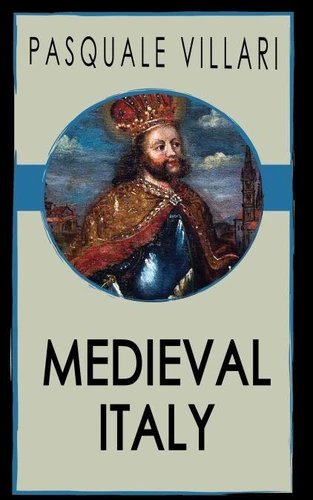
Medieval Italy
Par :Formats :
Disponible dans votre compte client Decitre ou Furet du Nord dès validation de votre commande. Le format ePub est :
- Compatible avec une lecture sur My Vivlio (smartphone, tablette, ordinateur)
- Compatible avec une lecture sur liseuses Vivlio
- Pour les liseuses autres que Vivlio, vous devez utiliser le logiciel Adobe Digital Edition. Non compatible avec la lecture sur les liseuses Kindle, Remarkable et Sony
 , qui est-ce ?
Notre partenaire de plateforme de lecture numérique où vous retrouverez l'ensemble de vos ebooks gratuitement
Pour en savoir plus sur nos ebooks, consultez notre aide en ligne ici
C'est si simple ! Lisez votre ebook avec l'app Vivlio sur votre tablette, mobile ou ordinateur :

- Nombre de pages413
- FormatePub
- ISBN978-1-5312-8617-0
- EAN9781531286170
- Date de parution19/01/2018
- Protection num.Digital Watermarking
- Taille607 Ko
- Infos supplémentairesepub
- ÉditeurJovian Press
Résumé
THE placing by Leo III. of the Imperial crown upon the head of Charlemagne in St. Peter's on Christmas Day of the year 800 marked the commencement of a new era in the history of the world. But the Empire of the West, initiated at that moment in its dual character--political and religious--contained within itself the germs of infinite discords and calamities. As Roman and Christian it should have symbolised the union of nations; but meanwhile the Empire of the East, heir to Rome, continued to exist at Constantinople.
Furthermore, the Western Empire was composed of very dissimilar races which, until then divided and subdivided among themselves, had often been at war with one another. The greatest and most immediate danger to the unity of the Empire came from the German principle of succession, according to which the State, as the property of the Sovereign, must be divided among his heirs. This principle, which in the past had caused many bloody wars among the Franks, promised no good for the future of the new Empire.
Charlemagne, who was a very great leader of Teutonic peoples, but who lacked the true genius of organisation, held it together by the power of his sword and the strength of his personal authority. It was therefore easy to predict that his death would be followed by a period of anarchy.
Furthermore, the Western Empire was composed of very dissimilar races which, until then divided and subdivided among themselves, had often been at war with one another. The greatest and most immediate danger to the unity of the Empire came from the German principle of succession, according to which the State, as the property of the Sovereign, must be divided among his heirs. This principle, which in the past had caused many bloody wars among the Franks, promised no good for the future of the new Empire.
Charlemagne, who was a very great leader of Teutonic peoples, but who lacked the true genius of organisation, held it together by the power of his sword and the strength of his personal authority. It was therefore easy to predict that his death would be followed by a period of anarchy.