SOLDES
Jusqu'à -70% sur une sélection d'articles*

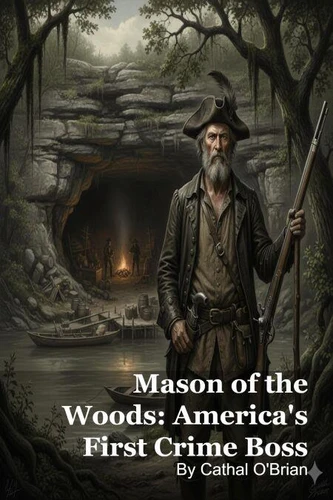
Mason of the Woods: America's First Crime Boss
Par :Formats :
Disponible dans votre compte client Decitre ou Furet du Nord dès validation de votre commande. Le format ePub est :
- Compatible avec une lecture sur My Vivlio (smartphone, tablette, ordinateur)
- Compatible avec une lecture sur liseuses Vivlio
- Pour les liseuses autres que Vivlio, vous devez utiliser le logiciel Adobe Digital Edition. Non compatible avec la lecture sur les liseuses Kindle, Remarkable et Sony
 , qui est-ce ?
Notre partenaire de plateforme de lecture numérique où vous retrouverez l'ensemble de vos ebooks gratuitement
Pour en savoir plus sur nos ebooks, consultez notre aide en ligne ici
C'est si simple ! Lisez votre ebook avec l'app Vivlio sur votre tablette, mobile ou ordinateur :

- FormatePub
- ISBN8232970383
- EAN9798232970383
- Date de parution24/11/2025
- Protection num.pas de protection
- Infos supplémentairesepub
- ÉditeurDraft2Digital
Résumé
Mason of the Woods: America's First Crime BossSamuel Mason's transformation from Revolutionary War militia captain to America's first organized crime boss reveals the brutal human costs of early American nation-building. Born in 1739 Virginia, Mason served honorably during the Revolution before economic collapse and crushing debt destroyed his legitimate life in Pennsylvania, forcing him to flee westward as a fugitive.
The psychological trauma of frontier warfare, combined with systemic economic failures and weak governmental institutions, pushed Mason toward systematic criminality. Operating from Cave-in-Rock and along the Natchez Trace between 1797 and 1803, he pioneered the application of military organizational principles to criminal enterprise, building a sophisticated gang that terrorized frontier commerce through river piracy and highway robbery.
His theatrical violence, including signing crimes in victims' blood and scalping murder victims, established him as the frontier's most feared predator. Mason's eventual betrayal and murder by his own gang members seeking a two-thousand-dollar bounty, followed by the execution and public display of his killers' severed heads, marked a turning point in frontier justice. His story illuminates how war trauma, economic instability, and institutional weakness combined to enable organized criminality during the republic's most vulnerable period, while his family struggled for generations with the burden of inherited infamy.
The psychological trauma of frontier warfare, combined with systemic economic failures and weak governmental institutions, pushed Mason toward systematic criminality. Operating from Cave-in-Rock and along the Natchez Trace between 1797 and 1803, he pioneered the application of military organizational principles to criminal enterprise, building a sophisticated gang that terrorized frontier commerce through river piracy and highway robbery.
His theatrical violence, including signing crimes in victims' blood and scalping murder victims, established him as the frontier's most feared predator. Mason's eventual betrayal and murder by his own gang members seeking a two-thousand-dollar bounty, followed by the execution and public display of his killers' severed heads, marked a turning point in frontier justice. His story illuminates how war trauma, economic instability, and institutional weakness combined to enable organized criminality during the republic's most vulnerable period, while his family struggled for generations with the burden of inherited infamy.
A propos de Cathal O'Brian

3,49 €