SOLDES
Jusqu'à -70% sur une sélection d'articles*

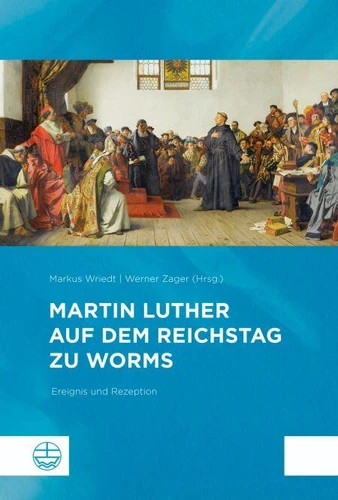
Martin Luther auf dem Reichstag zu Worms. Ereignis und Rezeption
Par : ,Formats :
Disponible dans votre compte client Decitre ou Furet du Nord dès validation de votre commande. Le format PDF est :
- Compatible avec une lecture sur My Vivlio (smartphone, tablette, ordinateur)
- Compatible avec une lecture sur liseuses Vivlio
- Pour les liseuses autres que Vivlio, vous devez utiliser le logiciel Adobe Digital Edition. Non compatible avec la lecture sur les liseuses Kindle, Remarkable et Sony
 , qui est-ce ?
Notre partenaire de plateforme de lecture numérique où vous retrouverez l'ensemble de vos ebooks gratuitement
Pour en savoir plus sur nos ebooks, consultez notre aide en ligne ici
C'est si simple ! Lisez votre ebook avec l'app Vivlio sur votre tablette, mobile ou ordinateur :

- Nombre de pages296
- FormatPDF
- ISBN978-3-374-07059-6
- EAN9783374070596
- Date de parution19/04/2022
- Protection num.Digital Watermarking
- Taille6 Mo
- Infos supplémentairespdf
- ÉditeurEvangelische Verlagsanstalt
Résumé
Martin Luthers Widerrufverweigerung am 18. April 1521 auf dem Reichstag zu Worms zählt zu den Sternstunden der Reformation. Vor Kaiser und Reich bekannte sich Luther zu seinen theologischen Schriften. Was er geschrieben habe, könne er nicht widerrufen, wenn er nicht durch »Zeugnisse der Schrift oder klare Vernunftgründe« überwunden würde. Ansonsten fühlte er sich gebunden an sein im Wort Gottes gefangenes Gewissen.
Die Beiträge des Bandes widmen sich zum einen diesem Ereignis selbst in seinem historischen Kontext.
Zum anderen werden die Wirkungen von Luthers Auftritt in Worms behandelt: in der zeitgenössischen Publizistik, in bildlichen Darstellungen durch die Jahrhunderte und später im Film, in der protestantischen Geistes- und Kulturgeschichte, in Lutherfestspielen und in Feiern zu Reichstagsjubiläen seit dem 19. Jahrhundert. [Martin Luther at the Diet of Worms. Event and Reception] Martin Luther's refusal to recant on 18 April 1521 at the Diet of Worms is one of the great moments of the Reformation.
Luther confessed his theological writings before the emperor and the empire. What he had written he could not revoke unless he was overcome »by testimonies of Scripture or clear reasons of reason« . Otherwise, he felt bound by his conscience imprisoned in the Word of God. The contributions in this volume are devoted on the one hand to this event itself in its historical context. On the other hand, the effects of Luther's appearance in Worms are dealt with: in contemporary pamphlets and Luther fables, in pictorial representations through the centuries and later in film, in Protestant intellectual and cultural history, in Luther festivals and in celebrations of Diet anniversaries since the 19th century.
Zum anderen werden die Wirkungen von Luthers Auftritt in Worms behandelt: in der zeitgenössischen Publizistik, in bildlichen Darstellungen durch die Jahrhunderte und später im Film, in der protestantischen Geistes- und Kulturgeschichte, in Lutherfestspielen und in Feiern zu Reichstagsjubiläen seit dem 19. Jahrhundert. [Martin Luther at the Diet of Worms. Event and Reception] Martin Luther's refusal to recant on 18 April 1521 at the Diet of Worms is one of the great moments of the Reformation.
Luther confessed his theological writings before the emperor and the empire. What he had written he could not revoke unless he was overcome »by testimonies of Scripture or clear reasons of reason« . Otherwise, he felt bound by his conscience imprisoned in the Word of God. The contributions in this volume are devoted on the one hand to this event itself in its historical context. On the other hand, the effects of Luther's appearance in Worms are dealt with: in contemporary pamphlets and Luther fables, in pictorial representations through the centuries and later in film, in Protestant intellectual and cultural history, in Luther festivals and in celebrations of Diet anniversaries since the 19th century.