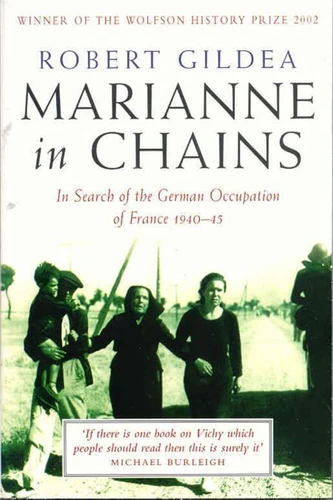
For the last fifty years, the German Occupation of France has been regarded as a period characterised by four things: cold, hunger, the absence of freedom and above all fear; a time when the indigenous population was cruelly and consistently oppressed by the army of occupation. The people of France were either bold members of the Resistance or craven collaborators. In this riveting and provocative study, Robert Gildea reveals a rather different story, a story which shows that the truth lies - as so often - somewhere in between.
'Excellent... a peculiarly rich book, enlightening about conscription, forced labour, the role of the Catholic Church, sex between German soldiers and French women ('horizontal collaboration') and much else' Frank McLynn, New Statesman 'Gildea's revisionist account is the most convincing and lucid that I have read. Rather as his Oxford colleague Roy Foster did for Irish history (when he rubbished the "400 years of national suffering" version that has had such disastrous consequences), Gildea has succeeded in giving us a startlingly original view of what we thought was a familiar period.' Patrick Marnham, Sunday Telegraph
For the last fifty years, the German Occupation of France has been regarded as a period characterised by four things: cold, hunger, the absence of freedom and above all fear; a time when the indigenous population was cruelly and consistently oppressed by the army of occupation. The people of France were either bold members of the Resistance or craven collaborators. In this riveting and provocative study, Robert Gildea reveals a rather different story, a story which shows that the truth lies - as so often - somewhere in between.
'Excellent... a peculiarly rich book, enlightening about conscription, forced labour, the role of the Catholic Church, sex between German soldiers and French women ('horizontal collaboration') and much else' Frank McLynn, New Statesman 'Gildea's revisionist account is the most convincing and lucid that I have read. Rather as his Oxford colleague Roy Foster did for Irish history (when he rubbished the "400 years of national suffering" version that has had such disastrous consequences), Gildea has succeeded in giving us a startlingly original view of what we thought was a familiar period.' Patrick Marnham, Sunday Telegraph

 , qui est-ce ?