SOLDES
Jusqu'à -70% sur une sélection d'articles*

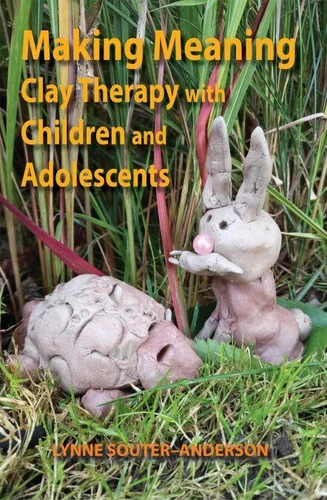
Making Meaning: Clay Therapy with Children and Adolescents. Clay Therapy, #2
Par : ,Formats :
Disponible dans votre compte client Decitre ou Furet du Nord dès validation de votre commande. Le format ePub est :
- Compatible avec une lecture sur My Vivlio (smartphone, tablette, ordinateur)
- Compatible avec une lecture sur liseuses Vivlio
- Pour les liseuses autres que Vivlio, vous devez utiliser le logiciel Adobe Digital Edition. Non compatible avec la lecture sur les liseuses Kindle, Remarkable et Sony
 , qui est-ce ?
Notre partenaire de plateforme de lecture numérique où vous retrouverez l'ensemble de vos ebooks gratuitement
Pour en savoir plus sur nos ebooks, consultez notre aide en ligne ici
C'est si simple ! Lisez votre ebook avec l'app Vivlio sur votre tablette, mobile ou ordinateur :

- FormatePub
- ISBN978-1-906289-73-7
- EAN9781906289737
- Date de parution19/09/2025
- Protection num.pas de protection
- Infos supplémentairesepub
- ÉditeurArchive Publishing
Résumé
It is delightful to see another book by Lynne Souter-Anderson, contributing to the field of Clay Therapy. Her first book, Touching Clay, Touching What?: The Use of Clay in Therapy (2010), gave credence and credibility to using clay in therapy. It was a pioneering book in the field of the creative arts therapies and gave a broad perspective on working in this modality with all age groups ; This new book is written for already qualified professionals who want to add the use of Clay Therapy in their work with children and adolescents.
It is a hands-on book for practitioners and easy to read. However, the application of clay therapy in this specialist field requires appropriate additional training ; Lynne's book is a significant addition to the small but growing library of books on the market about specialist therapeutic approaches with young children and adolescents. Play Therapy UK (PTUK)'s research analysis of over 300, 000 therapeutic sessions using the 'toolkit '(sand, music, clay, art/drawing, puppets, movement, drama, therapeutic story, creative visualisation etc.) has shown that clay is the fifth most used medium in play therapy sessions.
It is therefore an important medium to offer to children and adolescents to support their healing process ; Lynne achieves a good balance between the application of theory and the actual process, which is always valuable for the reader. This is especially well demonstrated in Chapter 1, 'Clay Therapy: Theoretical Underpinning of Clay Therapy', in which the author explains her own theoretical basis, 'The Theory of Contact: Physical, Emotional, Spiritual and Metaphorical'.
She uses the analogy of the 'five lenses' to demonstrate the stages of immersion and discovery in the clay therapy process, and includes an invaluable diagram to clarify her theory about the evolving nature of the process ; For me the book comes really alive through the ten case studies, which demonstrate how clay therapy has been used with the younger clients and adolescents, a client group that can prove to be difficult to reach and work with in therapy.
The illustrations used deepen the experience and understanding of the process for the reader. Throughout the case studies glimpses of the quality of the therapist's presence are seen, because she has the courage to show her own process thereby offering authenticity to the work ; To be able to do this effectively specialised training is required There is still very little published in the field, but it is heartening and exciting to see recent research initiatives described in the master's dissertations produced by students at the Academy of Play and Child Psychotherapy and Cambridge University, which are included towards the end of the book ; Lynne's book is a 'must-read' for all creative play and arts therapists. :
It is a hands-on book for practitioners and easy to read. However, the application of clay therapy in this specialist field requires appropriate additional training ; Lynne's book is a significant addition to the small but growing library of books on the market about specialist therapeutic approaches with young children and adolescents. Play Therapy UK (PTUK)'s research analysis of over 300, 000 therapeutic sessions using the 'toolkit '(sand, music, clay, art/drawing, puppets, movement, drama, therapeutic story, creative visualisation etc.) has shown that clay is the fifth most used medium in play therapy sessions.
It is therefore an important medium to offer to children and adolescents to support their healing process ; Lynne achieves a good balance between the application of theory and the actual process, which is always valuable for the reader. This is especially well demonstrated in Chapter 1, 'Clay Therapy: Theoretical Underpinning of Clay Therapy', in which the author explains her own theoretical basis, 'The Theory of Contact: Physical, Emotional, Spiritual and Metaphorical'.
She uses the analogy of the 'five lenses' to demonstrate the stages of immersion and discovery in the clay therapy process, and includes an invaluable diagram to clarify her theory about the evolving nature of the process ; For me the book comes really alive through the ten case studies, which demonstrate how clay therapy has been used with the younger clients and adolescents, a client group that can prove to be difficult to reach and work with in therapy.
The illustrations used deepen the experience and understanding of the process for the reader. Throughout the case studies glimpses of the quality of the therapist's presence are seen, because she has the courage to show her own process thereby offering authenticity to the work ; To be able to do this effectively specialised training is required There is still very little published in the field, but it is heartening and exciting to see recent research initiatives described in the master's dissertations produced by students at the Academy of Play and Child Psychotherapy and Cambridge University, which are included towards the end of the book ; Lynne's book is a 'must-read' for all creative play and arts therapists. :