
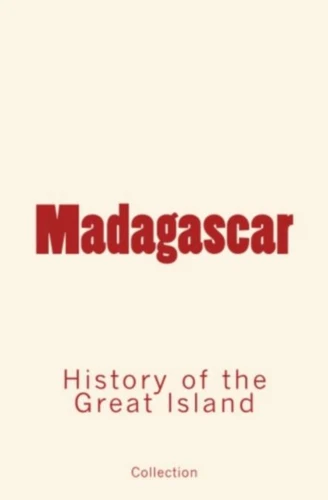
Madagascar. History of the Great Island
Par :Formats :
Disponible dans votre compte client Decitre ou Furet du Nord dès validation de votre commande. Le format ePub protégé est :
- Compatible avec une lecture sur My Vivlio (smartphone, tablette, ordinateur)
- Compatible avec une lecture sur liseuses Vivlio
- Pour les liseuses autres que Vivlio, vous devez utiliser le logiciel Adobe Digital Edition. Non compatible avec la lecture sur les liseuses Kindle, Remarkable et Sony
- Non compatible avec un achat hors France métropolitaine
 , qui est-ce ?
Notre partenaire de plateforme de lecture numérique où vous retrouverez l'ensemble de vos ebooks gratuitement
Pour en savoir plus sur nos ebooks, consultez notre aide en ligne ici
C'est si simple ! Lisez votre ebook avec l'app Vivlio sur votre tablette, mobile ou ordinateur :

- FormatePub
- ISBN978-2-36659-402-7
- EAN9782366594027
- Date de parution23/01/2017
- Copier Coller02 page(s) autorisée(s)
- Protection num.Adobe DRM
- Taille207 Ko
- Infos supplémentairesepub
- ÉditeurLE MONO (EDITIONS)
Résumé
Madagascar, that some called the Great Britain of Africa, is one of the largest islands in the world. It is said to have been discovered by Europeans in the year 1506. By the Portuguese it was called the island of St. Lawrence, either in honour of its discoverer, Lawrence Almeida, or, as stated by early writers, in accordance with a custom prevailing among them, in honour of the saint on whose day in the calendar it was first seen.
The French, during the reign of Henry IV, called it Isle Dauphine. The island had, however, for a long period previously, been known to the Moors and Arabs, who have visited its western shores for the purpose of trade. By them it was called Serandah, and not Serandib, as stated by Rochon, which there is every reason to believe was the name they gave to Ceylon. The inhabitants of Europe had also been previously made acquainted with its existence by the accounts of Marco Paulo, whose travels were published in the close of the 13th century.
This is the general history of Madagascar, the Great Island.
The French, during the reign of Henry IV, called it Isle Dauphine. The island had, however, for a long period previously, been known to the Moors and Arabs, who have visited its western shores for the purpose of trade. By them it was called Serandah, and not Serandib, as stated by Rochon, which there is every reason to believe was the name they gave to Ceylon. The inhabitants of Europe had also been previously made acquainted with its existence by the accounts of Marco Paulo, whose travels were published in the close of the 13th century.
This is the general history of Madagascar, the Great Island.
A propos de . Collection


2,49 €
3,49 €

3,99 €

3,99 €
3,49 €
4,49 €



4,49 €

3,49 €


3,99 €

2,99 €