
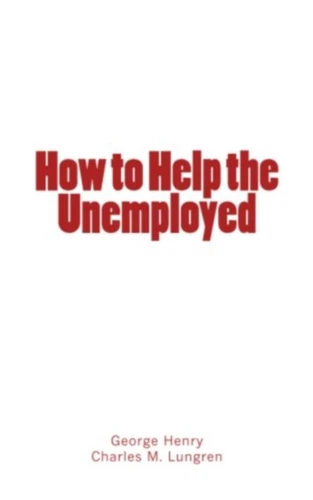
How to Help the Unemployed
Par :Formats :
Disponible dans votre compte client Decitre ou Furet du Nord dès validation de votre commande. Le format Multi-format est :
- Pour les liseuses autres que Vivlio, vous devez utiliser le logiciel Adobe Digital Edition. Non compatible avec la lecture sur les liseuses Kindle, Remarkable et Sony
 , qui est-ce ?
Notre partenaire de plateforme de lecture numérique où vous retrouverez l'ensemble de vos ebooks gratuitement
Pour en savoir plus sur nos ebooks, consultez notre aide en ligne ici
C'est si simple ! Lisez votre ebook avec l'app Vivlio sur votre tablette, mobile ou ordinateur :

- FormatMulti-format
- ISBN978-2-36659-396-9
- EAN9782366593969
- Date de parution21/01/2017
- Protection num.pas de protection
- Infos supplémentairesMulti-Format
- ÉditeurLE MONO (EDITIONS)
Résumé
How to help the unemployed? This subject developed by Henry George is more relevant to our time when unemployment becomes a major problem. Henry George, famous for his book titled Progress and Poverty, was American political economist who developed a "tax reform" project and promoted economic philosophy based on the equal right of all men to the use of the earth. The economic value derived from land and natural resources should belong equally to all members of society.
"Why should charity be offered the unemployed? It is not alms they ask. They are insulted and embittered and degraded by being forced to accept as paupers what they would gladly earn as workers. What they ask is not charity, but the opportunity to use their own labor in satisfying their own wants. Why can they not have that? It is their natural right. He who made food and clothing and shelter necessary to man's life has also given to man, in the power of labor, the means of maintaining that life; and when, without fault of their own, men cannot exert that power, there is somewhere a wrong of the same kind as denial of the right of property and denial of the right of life..."
"Why should charity be offered the unemployed? It is not alms they ask. They are insulted and embittered and degraded by being forced to accept as paupers what they would gladly earn as workers. What they ask is not charity, but the opportunity to use their own labor in satisfying their own wants. Why can they not have that? It is their natural right. He who made food and clothing and shelter necessary to man's life has also given to man, in the power of labor, the means of maintaining that life; and when, without fault of their own, men cannot exert that power, there is somewhere a wrong of the same kind as denial of the right of property and denial of the right of life..."
A propos de . Collection




2,49 €

3,49 €
3,99 €
3,99 €

3,49 €


3,99 €
4,49 €



4,49 €


3,99 €

2,99 €