SOLDES
Jusqu'à -70% sur une sélection d'articles*

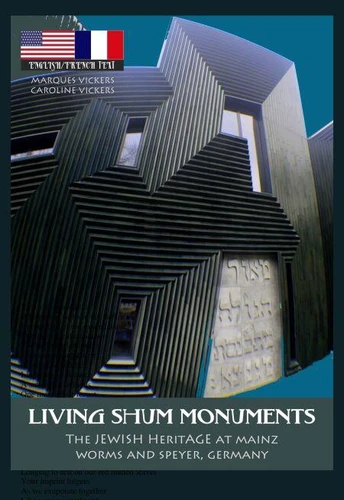
Living Shum Monuments: The Jewish Heritage of Mainz, Worms and Speyer Germany
Par :Formats :
Disponible dans votre compte client Decitre ou Furet du Nord dès validation de votre commande. Le format ePub est :
- Compatible avec une lecture sur My Vivlio (smartphone, tablette, ordinateur)
- Compatible avec une lecture sur liseuses Vivlio
- Pour les liseuses autres que Vivlio, vous devez utiliser le logiciel Adobe Digital Edition. Non compatible avec la lecture sur les liseuses Kindle, Remarkable et Sony
 , qui est-ce ?
Notre partenaire de plateforme de lecture numérique où vous retrouverez l'ensemble de vos ebooks gratuitement
Pour en savoir plus sur nos ebooks, consultez notre aide en ligne ici
C'est si simple ! Lisez votre ebook avec l'app Vivlio sur votre tablette, mobile ou ordinateur :

- FormatePub
- ISBN978-1-005-34510-5
- EAN9781005345105
- Date de parution29/07/2020
- Protection num.pas de protection
- Infos supplémentairesepub
- ÉditeurC. C. Chamberlane
Résumé
"Living ShUM Monuments" is a pictorial edition documenting the most prominent remaining and newly constructed memorials of the region's present day Jewish heritage in central Germany. The text is written in both English and French languages. Originating from the tenth century, the middle Rhine River cities of Mainz, Worms and Speyer would establish some of the earliest Jewish colonies documented in Central and Eastern Europe.
The three communities created a unique cultural cluster that influenced the religion, architecture, scholarship and administrative justice of the era, the Ashkenazi Diaspora. The ShUM community name was coined from the initial letters of Speyer, Worms and Mainz in Hebrew. During an ancient assembly in 1223, the legal status was affirmed. Globally Jewish communities and particularly the ShUM have historically endured persecution, dispersal and unfounded blame for historical calamities including the pestilence that decimated Europe during the Middle Ages.
They have survived the ravages of mob violence, religious intolerance and grinding ignorance that has pervaded civilization despite eras of educational and artistic enlightenment. Throughout all, notable ShUM monuments have endured. Most have undergone massive renovations and even recreations for the present living. The historical resilience of the ShUM has been coupled by contemporary innovation.
Jewish populations were never numerous within the three cities, but a recent period of exodus from Eastern Europe countries since the 1990s has reversed a previous post-World War II population vacancy. The dissolution of communism opened the portals to previously suppressed religious expression. The recently constructed synagogues in Mainz and Speyer rival the most innovative modern clergical architecture proliferating a progressive energy of growth and expansion.
The cities of Mainz, Worms and Speyer are once again embracing vibrancy in their economic climates, diversity of cultural expression and recognition internationally. It appears appropriate that the foundations of this renaissance should include one of its important cultural and religious components. The edition details the background, history and showcases in photographic detail the following historical and cultural treasures:German Stolpersteines (The Bronze Pavement Stones Recognizing Holocaust Victims)Worms:Jewish Quarter, Ancient Synagogue and Mikveh (ritual bath) and the Heiliger (Holy Sands) CemeteryMainz:Light of the Diaspora Synagogue, Synagogue of Weisenau, St.
Stephen's Cathedral and Artist Marc Chagall's Blue Windows and the ancient Jewish cemetery. Speyer:Jewish Quarter, Mikveh (ritual bath), Ancient Romanesque hall synagogue east wall, Beit Shalom Synagogue and Ancient Jewish Cemetery.
The three communities created a unique cultural cluster that influenced the religion, architecture, scholarship and administrative justice of the era, the Ashkenazi Diaspora. The ShUM community name was coined from the initial letters of Speyer, Worms and Mainz in Hebrew. During an ancient assembly in 1223, the legal status was affirmed. Globally Jewish communities and particularly the ShUM have historically endured persecution, dispersal and unfounded blame for historical calamities including the pestilence that decimated Europe during the Middle Ages.
They have survived the ravages of mob violence, religious intolerance and grinding ignorance that has pervaded civilization despite eras of educational and artistic enlightenment. Throughout all, notable ShUM monuments have endured. Most have undergone massive renovations and even recreations for the present living. The historical resilience of the ShUM has been coupled by contemporary innovation.
Jewish populations were never numerous within the three cities, but a recent period of exodus from Eastern Europe countries since the 1990s has reversed a previous post-World War II population vacancy. The dissolution of communism opened the portals to previously suppressed religious expression. The recently constructed synagogues in Mainz and Speyer rival the most innovative modern clergical architecture proliferating a progressive energy of growth and expansion.
The cities of Mainz, Worms and Speyer are once again embracing vibrancy in their economic climates, diversity of cultural expression and recognition internationally. It appears appropriate that the foundations of this renaissance should include one of its important cultural and religious components. The edition details the background, history and showcases in photographic detail the following historical and cultural treasures:German Stolpersteines (The Bronze Pavement Stones Recognizing Holocaust Victims)Worms:Jewish Quarter, Ancient Synagogue and Mikveh (ritual bath) and the Heiliger (Holy Sands) CemeteryMainz:Light of the Diaspora Synagogue, Synagogue of Weisenau, St.
Stephen's Cathedral and Artist Marc Chagall's Blue Windows and the ancient Jewish cemetery. Speyer:Jewish Quarter, Mikveh (ritual bath), Ancient Romanesque hall synagogue east wall, Beit Shalom Synagogue and Ancient Jewish Cemetery.
A propos de Marques Vickers

5,49 €





5,49 €

5,49 €




5,99 €


5,99 €