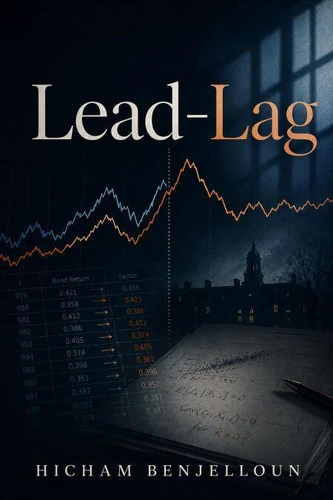
Nora El-Amrani has built her career on a famous piece of financial research. So has the professor who mentored her, opened doors for her, and taught her how serious scholarship is supposed to be done. Then a colleague notices something strange in the data. At first, it looks small: a question about dates, old bond prices, and when information was actually available. The kind of technical problem most people would never notice.
But the deeper Nora looks, the harder it becomes to dismiss. The celebrated paper at the center of her field is not simply wrong. The truth is more uncomfortable than that. Years of reasonable decisions, ambiguous data, professional pressure, and things everyone meant to explain later have quietly pushed the evidence in the same direction. And Nora has inherited some of those choices in her own work.
Exposing what she finds could damage the career of the man she trusts most, shake an entire academic field, and threaten the tenure she has spent years working toward. Staying silent would be easier. It might even be defensible. But once you know where the uncertainty was hidden, can you ever honestly say you did not see it?Lead-Lag is a literary psychological thriller about ambition, mentorship, research, and the small compromises through which certainty is manufactured.
It is not a story about villains falsifying numbers. It is about something more ordinary-and perhaps more dangerous: intelligent people wanting a result to be true.
Nora El-Amrani has built her career on a famous piece of financial research. So has the professor who mentored her, opened doors for her, and taught her how serious scholarship is supposed to be done. Then a colleague notices something strange in the data. At first, it looks small: a question about dates, old bond prices, and when information was actually available. The kind of technical problem most people would never notice.
But the deeper Nora looks, the harder it becomes to dismiss. The celebrated paper at the center of her field is not simply wrong. The truth is more uncomfortable than that. Years of reasonable decisions, ambiguous data, professional pressure, and things everyone meant to explain later have quietly pushed the evidence in the same direction. And Nora has inherited some of those choices in her own work.
Exposing what she finds could damage the career of the man she trusts most, shake an entire academic field, and threaten the tenure she has spent years working toward. Staying silent would be easier. It might even be defensible. But once you know where the uncertainty was hidden, can you ever honestly say you did not see it?Lead-Lag is a literary psychological thriller about ambition, mentorship, research, and the small compromises through which certainty is manufactured.
It is not a story about villains falsifying numbers. It is about something more ordinary-and perhaps more dangerous: intelligent people wanting a result to be true.


 , qui est-ce ?