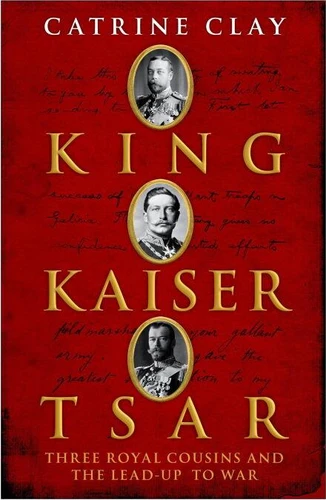
King, Kaiser, Tsar
Par :Formats :
Disponible dans votre compte client Decitre ou Furet du Nord dès validation de votre commande. Le format ePub protégé est :
- Compatible avec une lecture sur My Vivlio (smartphone, tablette, ordinateur)
- Compatible avec une lecture sur liseuses Vivlio
- Pour les liseuses autres que Vivlio, vous devez utiliser le logiciel Adobe Digital Edition. Non compatible avec la lecture sur les liseuses Kindle, Remarkable et Sony
- Non compatible avec un achat hors France métropolitaine
 , qui est-ce ?
Notre partenaire de plateforme de lecture numérique où vous retrouverez l'ensemble de vos ebooks gratuitement
Pour en savoir plus sur nos ebooks, consultez notre aide en ligne ici
C'est si simple ! Lisez votre ebook avec l'app Vivlio sur votre tablette, mobile ou ordinateur :

- Nombre de pages432
- FormatePub
- ISBN978-1-4736-1251-8
- EAN9781473612518
- Date de parution15/04/2015
- Protection num.Adobe DRM
- Infos supplémentairesepub
- ÉditeurJohn Murray
Résumé
During the last days of July 1914 telegrams flew between the King, the Kaiser and the Tsar. George V, Wilhelm II and Nicholas II, known in the family as Georgie, Willy and Nicky, were cousins. Between them they ruled over half the world. They had been friends since childhood. But by July 1914 the Trade Union of Kings was falling apart. Each was blaming the other for the impending disaster of the First World War.
'Have I gone mad ' Nicky asked his wife Alix in St Petersburg, showing her another telegram from Willy. 'What on earth does William mean pretending that it still depends on me whether war is averted or not!' Behind the friendliness of family gatherings lurked family quarrels, which were often played out in public. Drawing widely on previously unpublished documents, this is the extraordinary story of their overlapping lives, conducted in palaces of unimaginable opulence, surrounded by flattery and political intrigue.
And through it runs the question: to what extent were the King, the Kaiser and the Tsar responsible for the outbreak of the war, and, as it turned out, for the end of autocratic monarchy
'Have I gone mad ' Nicky asked his wife Alix in St Petersburg, showing her another telegram from Willy. 'What on earth does William mean pretending that it still depends on me whether war is averted or not!' Behind the friendliness of family gatherings lurked family quarrels, which were often played out in public. Drawing widely on previously unpublished documents, this is the extraordinary story of their overlapping lives, conducted in palaces of unimaginable opulence, surrounded by flattery and political intrigue.
And through it runs the question: to what extent were the King, the Kaiser and the Tsar responsible for the outbreak of the war, and, as it turned out, for the end of autocratic monarchy
A propos de Catrine Clay
3,99 €