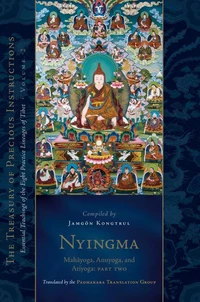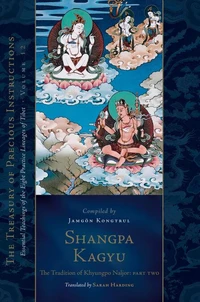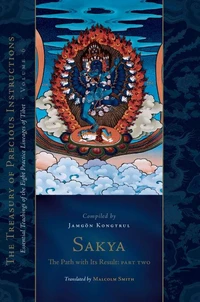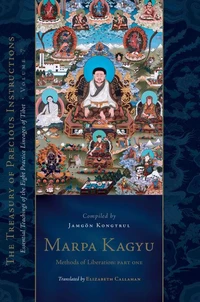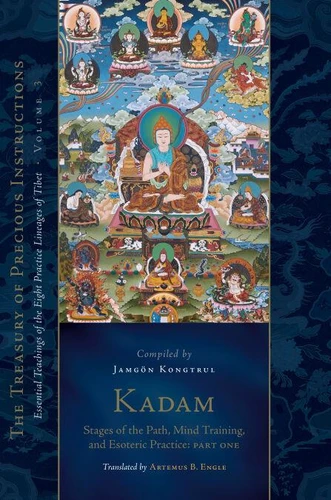
Kadam: Stages of the Path, Mind Training, and Esoteric Practice, Part One. Essential Teachings of the Eight Practice Lineages of Tibet, Volume 3 (The Treasury of Precious Instructions)
Par : ,Formats :
Disponible dans votre compte client Decitre ou Furet du Nord dès validation de votre commande. Le format ePub protégé est :
- Compatible avec une lecture sur My Vivlio (smartphone, tablette, ordinateur)
- Compatible avec une lecture sur liseuses Vivlio
- Pour les liseuses autres que Vivlio, vous devez utiliser le logiciel Adobe Digital Edition. Non compatible avec la lecture sur les liseuses Kindle, Remarkable et Sony
- Non compatible avec un achat hors France métropolitaine
 , qui est-ce ?
Notre partenaire de plateforme de lecture numérique où vous retrouverez l'ensemble de vos ebooks gratuitement
Pour en savoir plus sur nos ebooks, consultez notre aide en ligne ici
C'est si simple ! Lisez votre ebook avec l'app Vivlio sur votre tablette, mobile ou ordinateur :

- Nombre de pages448
- FormatePub
- ISBN978-0-8348-4551-0
- EAN9780834845510
- Date de parution02/04/2024
- Protection num.Adobe DRM
- Taille3 Mo
- Infos supplémentairesepub
- ÉditeurSnow Lion
Résumé
?A comprehensive selection of texts central to the Kadam lineage of Tibetan Buddhism, including topics like Mind Training, Stages of the Path, and esoteric tantric instructions. The Treasury of Precious Instructions by Jamgön Kongtrul Lodrö Taye, one of Tibet's greatest Buddhist masters, is a shining jewel of Tibetan literature, presenting essential teachings from the entire spectrum of practice lineages that existed in Tibet.
In its eighteen volumes, Kongtrul brings together some of the most important texts on key topics of Buddhist thought and practice as well as authoring significant new sections of his own. ??The Kadam lineage derives from the teachings and practices taught by the Indian master Atisa and his Tibetan students. Atisa spent twelve years in Tibet and left a scholarly and devotional lineage that would be significant to all traditions of Tibetan Buddhism, but particularly the Geluk, the tradition of the Dalai Lamas, which fashioned themselves as the New Kadam tradition. ? Jamgön Kongtrul's catalog to The Treasury of Precious Instructions classifies Kadam literature into five categories: treatise, instruction, esoteric practice, ancillary works, and associated works.
The first two are the main topics covered in this volume: Lamrim, or Stages of the Path, and Lojong, or Mind Training. These two Kadam teachings continue to exert a significant influence on Tibetan Buddhism and therefore represent the legacy of the Kadam tradition. ?The first centers around "The Lamp for the Path to Enlightenment, " written by the eleventh-century Indian master Atisa who spent twelve years in Tibet, and this volume also includes stories of Atisa's life and travels.
The second set of teachings consists of aphorisms known as the Seven-Point Mind Training, meant to be used as contemplative practices to develop compassion and transform the mind. These selections show not only the foundational texts of the Kadam tradition but also the widespread impact these teachings continued to have across traditions.
In its eighteen volumes, Kongtrul brings together some of the most important texts on key topics of Buddhist thought and practice as well as authoring significant new sections of his own. ??The Kadam lineage derives from the teachings and practices taught by the Indian master Atisa and his Tibetan students. Atisa spent twelve years in Tibet and left a scholarly and devotional lineage that would be significant to all traditions of Tibetan Buddhism, but particularly the Geluk, the tradition of the Dalai Lamas, which fashioned themselves as the New Kadam tradition. ? Jamgön Kongtrul's catalog to The Treasury of Precious Instructions classifies Kadam literature into five categories: treatise, instruction, esoteric practice, ancillary works, and associated works.
The first two are the main topics covered in this volume: Lamrim, or Stages of the Path, and Lojong, or Mind Training. These two Kadam teachings continue to exert a significant influence on Tibetan Buddhism and therefore represent the legacy of the Kadam tradition. ?The first centers around "The Lamp for the Path to Enlightenment, " written by the eleventh-century Indian master Atisa who spent twelve years in Tibet, and this volume also includes stories of Atisa's life and travels.
The second set of teachings consists of aphorisms known as the Seven-Point Mind Training, meant to be used as contemplative practices to develop compassion and transform the mind. These selections show not only the foundational texts of the Kadam tradition but also the widespread impact these teachings continued to have across traditions.