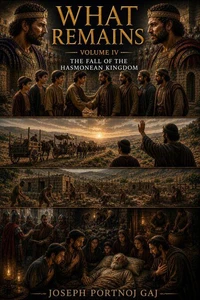
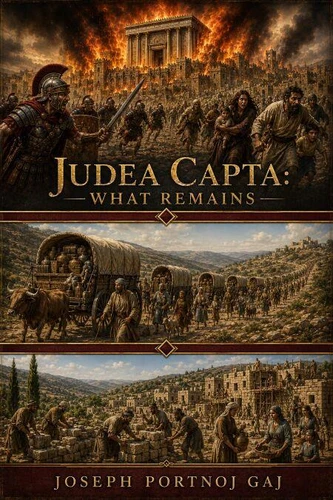
In the final days before the fall of Jerusalem, the city still stands-but something within it has already begun to break. Whispers replace trust. Voices rise against one another. And in the silence between decisions, a people begins to fracture from within. As factions grow and restraint fades, violence no longer comes from the outside alone. It moves quietly through the streets, unseen yet understood, until what once held the city together can no longer endure.
Beyond its walls, far from the center of power and conflict, a small community has taken root. Built by men who chose not conquest but continuity, Maayanot Yarden is a place shaped by labor, faith, and shared purpose. There, life unfolds differently-measured not by ambition, but by what can be preserved. Under the steady guidance of Tzemach and Eleazar, families build, teach, and raise their children with a quiet understanding: that survival is not only remaining alive, but protecting what must not be lost.
But the world does not remain distant. News arrives. Violence spreads. And Rome, patient and decisive, begins to move. As the empire advances and Jerusalem turns against itself, the community faces a choice that will define its future: remain and be consumed, or leave and carry forward what cannot be rebuilt if lost. What follows is not a story of heroes or battles, but of decisions-quiet, irreversible, and deeply human.
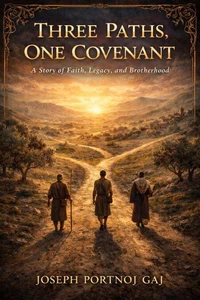
Families gather what they can. They leave behind what they must. And on a road uncertain and unprotected, they begin again. Judea Capta: What Remains is a powerful historical novel of loss, endurance, and legacy. Set against one of the most defining moments in Jewish history, it explores not only the fall of a people's center, but the strength required to rebuild beyond it. It is a story of what survives when everything else is taken.
And of those who choose not to disappear.
In the final days before the fall of Jerusalem, the city still stands-but something within it has already begun to break. Whispers replace trust. Voices rise against one another. And in the silence between decisions, a people begins to fracture from within. As factions grow and restraint fades, violence no longer comes from the outside alone. It moves quietly through the streets, unseen yet understood, until what once held the city together can no longer endure.
Beyond its walls, far from the center of power and conflict, a small community has taken root. Built by men who chose not conquest but continuity, Maayanot Yarden is a place shaped by labor, faith, and shared purpose. There, life unfolds differently-measured not by ambition, but by what can be preserved. Under the steady guidance of Tzemach and Eleazar, families build, teach, and raise their children with a quiet understanding: that survival is not only remaining alive, but protecting what must not be lost.
But the world does not remain distant. News arrives. Violence spreads. And Rome, patient and decisive, begins to move. As the empire advances and Jerusalem turns against itself, the community faces a choice that will define its future: remain and be consumed, or leave and carry forward what cannot be rebuilt if lost. What follows is not a story of heroes or battles, but of decisions-quiet, irreversible, and deeply human.
Families gather what they can. They leave behind what they must. And on a road uncertain and unprotected, they begin again. Judea Capta: What Remains is a powerful historical novel of loss, endurance, and legacy. Set against one of the most defining moments in Jewish history, it explores not only the fall of a people's center, but the strength required to rebuild beyond it. It is a story of what survives when everything else is taken.
And of those who choose not to disappear.

 , qui est-ce ?