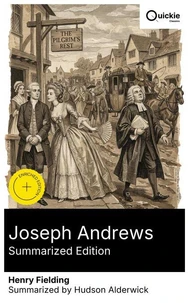
Henry Fielding's "Joseph Andrews" is a pioneering work in the realm of English literature, often regarded as one of the earliest novels. Published in 1742, this narrative employs a rich tapestry of humor, satire, and social commentary to examine contemporary values through the misadventures of its virtuous protagonist, Joseph Andrews. Fielding employs a unique blend of realism and parody, drawing inspiration from Cervantes' "Don Quixote" and the burgeoning genre of the novel, which seeks to reflect life in its multitudes while critiquing societal norms and moral hypocrisies.
The characters traverse a landscape filled with raucous humor and poignant observations, ultimately advocating for the triumph of virtue in an often corrupt world. Fielding, renowned for his sharp wit and keen perception of human nature, was moved by his own experiences within the legal and theatrical milieu of 18th-century England. As a novelist, playwright, and magistrate, Fielding faced the complexities of human greed and moral indifference, informing his characterization and the ethical dilemmas presented in the novel.
His background in law and his observations of society's follies equipped him with the insights to craft a narrative that balances entertainment with profound moral inquiries. "Joseph Andrews" is an essential read for anyone interested in the evolution of the novel and the nuances of human character. With its clever dialogue and insightful critique of societal mores, Fielding's work remains relevant today.
Readers will appreciate the vibrant characters, engaging narrative, and the exploration of virtue amidst vice, making it significant not just in its historical context but also in contemporary discussions of morality and society.
Henry Fielding's "Joseph Andrews" is a pioneering work in the realm of English literature, often regarded as one of the earliest novels. Published in 1742, this narrative employs a rich tapestry of humor, satire, and social commentary to examine contemporary values through the misadventures of its virtuous protagonist, Joseph Andrews. Fielding employs a unique blend of realism and parody, drawing inspiration from Cervantes' "Don Quixote" and the burgeoning genre of the novel, which seeks to reflect life in its multitudes while critiquing societal norms and moral hypocrisies.
The characters traverse a landscape filled with raucous humor and poignant observations, ultimately advocating for the triumph of virtue in an often corrupt world. Fielding, renowned for his sharp wit and keen perception of human nature, was moved by his own experiences within the legal and theatrical milieu of 18th-century England. As a novelist, playwright, and magistrate, Fielding faced the complexities of human greed and moral indifference, informing his characterization and the ethical dilemmas presented in the novel.
His background in law and his observations of society's follies equipped him with the insights to craft a narrative that balances entertainment with profound moral inquiries. "Joseph Andrews" is an essential read for anyone interested in the evolution of the novel and the nuances of human character. With its clever dialogue and insightful critique of societal mores, Fielding's work remains relevant today.
Readers will appreciate the vibrant characters, engaging narrative, and the exploration of virtue amidst vice, making it significant not just in its historical context but also in contemporary discussions of morality and society.

 , qui est-ce ?