SOLDES
Jusqu'à -70% sur une sélection d'articles*

Nouveauté
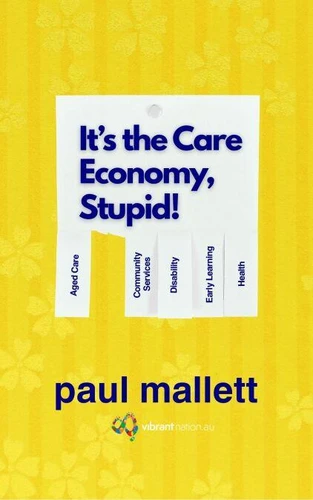
“It’s the Care Economy, Stupid!”: A Blueprint for a Prevention-First Care Economy in Tasmania. Vibrant Leadership Series, #5
Par :Formats :
Disponible dans votre compte client Decitre ou Furet du Nord dès validation de votre commande. Le format ePub est :
- Compatible avec une lecture sur My Vivlio (smartphone, tablette, ordinateur)
- Compatible avec une lecture sur liseuses Vivlio
- Pour les liseuses autres que Vivlio, vous devez utiliser le logiciel Adobe Digital Edition. Non compatible avec la lecture sur les liseuses Kindle, Remarkable et Sony
 , qui est-ce ?
Notre partenaire de plateforme de lecture numérique où vous retrouverez l'ensemble de vos ebooks gratuitement
Pour en savoir plus sur nos ebooks, consultez notre aide en ligne ici
C'est si simple ! Lisez votre ebook avec l'app Vivlio sur votre tablette, mobile ou ordinateur :

- FormatePub
- ISBN978-1-7642922-7-6
- EAN9781764292276
- Date de parution08/07/2026
- Protection num.pas de protection
- Infos supplémentairesepub
- Éditeurpaul mallett
Résumé
"It's the Care Economy, Stupid!" makes visible the work, systems, and people that quietly hold everyday life together. Care is the foundation beneath work, learning, and community life. Everyday life depends on care. Children learning, adults working, people ageing with dignity, and communities staying connected all rely on the presence of care across the life course. Yet care systems are rarely governed as a whole.
Responsibility fragments across portfolios. Support arrives late. Capacity thins quietly. Families, workers, and communities absorb the strain long before it appears in public debate. Drawing on lived experience across Tasmania, the book traces twelve interconnected fault lines in the care economy. These patterns show how care demand is predictable across childhood, adulthood, ageing, illness, disability, and recovery, yet systems respond through delay rather than preparation.
Workforce pressure grows, participation narrows, and downstream costs accumulate over time. These are not stories of crisis or collapse. They are accounts of how strain becomes normal when care is treated as discretionary rather than essential. Moving between lived experience and structural explanation, the book shows how care capacity underpins participation in work, learning, and community life.
When care systems thin, people step back quietly. Hours of work are reduced. Help is delayed. Pressure accumulates. The economy absorbs the cost long before it appears in budgets or policy debates. It's the Care Economy, Stupid! argues that care is not a residual social issue. It is foundational infrastructure. When governed deliberately, it stabilises participation, sustains the workforce, enables prevention, and reduces long-term public cost.
When neglected, it transfers risk onto families, workers, and communities. Both diagnosis and blueprint, the book sets out a practical reform architecture for building a prevention-first care economy. It shows how responsibility can be held across time, how early action can replace late response, and how care capacity and the workforce that delivers it can be planned and sustained across cities, suburbs, and regional communities.
If care underpins everything, the question becomes unavoidable:Why do we continue to govern it as an afterthought?
Responsibility fragments across portfolios. Support arrives late. Capacity thins quietly. Families, workers, and communities absorb the strain long before it appears in public debate. Drawing on lived experience across Tasmania, the book traces twelve interconnected fault lines in the care economy. These patterns show how care demand is predictable across childhood, adulthood, ageing, illness, disability, and recovery, yet systems respond through delay rather than preparation.
Workforce pressure grows, participation narrows, and downstream costs accumulate over time. These are not stories of crisis or collapse. They are accounts of how strain becomes normal when care is treated as discretionary rather than essential. Moving between lived experience and structural explanation, the book shows how care capacity underpins participation in work, learning, and community life.
When care systems thin, people step back quietly. Hours of work are reduced. Help is delayed. Pressure accumulates. The economy absorbs the cost long before it appears in budgets or policy debates. It's the Care Economy, Stupid! argues that care is not a residual social issue. It is foundational infrastructure. When governed deliberately, it stabilises participation, sustains the workforce, enables prevention, and reduces long-term public cost.
When neglected, it transfers risk onto families, workers, and communities. Both diagnosis and blueprint, the book sets out a practical reform architecture for building a prevention-first care economy. It shows how responsibility can be held across time, how early action can replace late response, and how care capacity and the workforce that delivers it can be planned and sustained across cities, suburbs, and regional communities.
If care underpins everything, the question becomes unavoidable:Why do we continue to govern it as an afterthought?