SOLDES
Jusqu'à -70% sur une sélection d'articles*

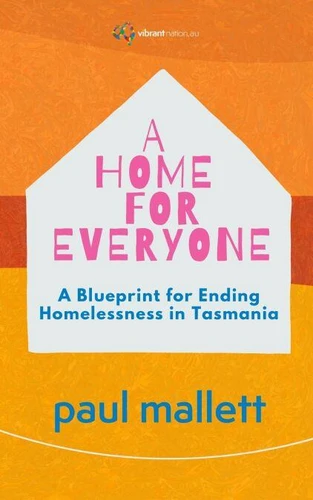
A Home for Everyone: A Blueprint for Ending Homelessness in Tasmania. Vibrant Leadership Series, #2
Par :Formats :
Disponible dans votre compte client Decitre ou Furet du Nord dès validation de votre commande. Le format ePub est :
- Compatible avec une lecture sur My Vivlio (smartphone, tablette, ordinateur)
- Compatible avec une lecture sur liseuses Vivlio
- Pour les liseuses autres que Vivlio, vous devez utiliser le logiciel Adobe Digital Edition. Non compatible avec la lecture sur les liseuses Kindle, Remarkable et Sony
 , qui est-ce ?
Notre partenaire de plateforme de lecture numérique où vous retrouverez l'ensemble de vos ebooks gratuitement
Pour en savoir plus sur nos ebooks, consultez notre aide en ligne ici
C'est si simple ! Lisez votre ebook avec l'app Vivlio sur votre tablette, mobile ou ordinateur :

- FormatePub
- ISBN978-1-7644089-0-5
- EAN9781764408905
- Date de parution01/02/2026
- Protection num.pas de protection
- Infos supplémentairesepub
- Éditeurpaul mallett
Résumé
A Home for Everyone begins from a clear recognition: homelessness and housing insecurity are not accidents, nor inevitable features of modern life. They are the foreseeable result of policy choices made over decades to treat housing as discretionary, supply as optional, and crisis as normal. Inside these pages are illustrative stories drawn from patterns seen across Tasmania. They are composites, constructed to reflect recurring pathways into and through homelessness.
People cycling between temporary places. Young people leaving care with nowhere secure to land. Families holding tenancies together until one shock pushes them over the edge. Older Tasmanians waiting years for housing that never arrives. These stories are not personal tragedies or isolated anecdotes. They are narrative representations of documented system patterns. They reveal how homelessness is produced when responsibility fragments, housing is structured as a wealth vehicle instead of a human right, and time itself becomes an instrument of harm.
The book moves between lived experience and structural explanation. It shows how homelessness is produced by the absence of a duty to house, by fragmented planning and delivery, by weak public stewardship of land and supply, and by systems that respond after housing is lost rather than preventing loss in the first place. It argues that when housing is treated as essential public infrastructure and a human right, homelessness becomes shorter, rarer, and preventable.
A Home for Everyone sets out a practical blueprint for change. It shows how homelessness can be ended through a prevention-first system design, the steady accumulation of permanent housing supply, the creation of stable non-speculative housing pathways, safe exits from institutions, and long-term stewardship of land, housing, and outcomes. Homelessness can be ended. The tools are known. The evidence and the ethical case are compelling.
What remains is the work of choosing, together, to build a system that never again accepts homelessness as inevitable, and never again looks away when prevention is within reach.
People cycling between temporary places. Young people leaving care with nowhere secure to land. Families holding tenancies together until one shock pushes them over the edge. Older Tasmanians waiting years for housing that never arrives. These stories are not personal tragedies or isolated anecdotes. They are narrative representations of documented system patterns. They reveal how homelessness is produced when responsibility fragments, housing is structured as a wealth vehicle instead of a human right, and time itself becomes an instrument of harm.
The book moves between lived experience and structural explanation. It shows how homelessness is produced by the absence of a duty to house, by fragmented planning and delivery, by weak public stewardship of land and supply, and by systems that respond after housing is lost rather than preventing loss in the first place. It argues that when housing is treated as essential public infrastructure and a human right, homelessness becomes shorter, rarer, and preventable.
A Home for Everyone sets out a practical blueprint for change. It shows how homelessness can be ended through a prevention-first system design, the steady accumulation of permanent housing supply, the creation of stable non-speculative housing pathways, safe exits from institutions, and long-term stewardship of land, housing, and outcomes. Homelessness can be ended. The tools are known. The evidence and the ethical case are compelling.
What remains is the work of choosing, together, to build a system that never again accepts homelessness as inevitable, and never again looks away when prevention is within reach.